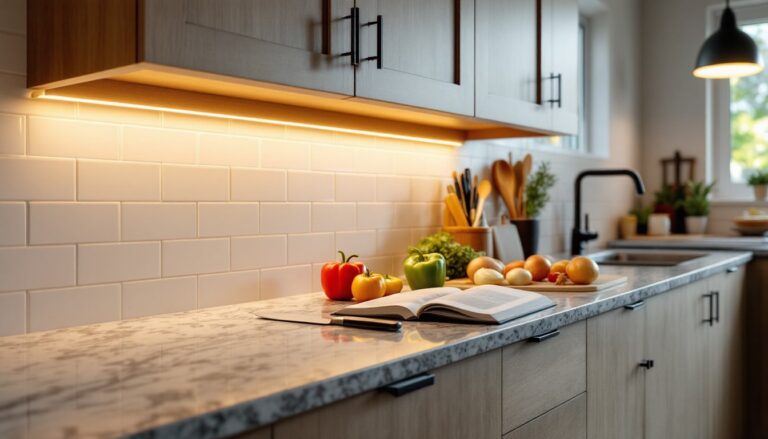
Three-inch LED recessed lights have become the go-to solution for homeowners tackling lighting upgrades in tight spaces. These compact fixtures deliver impressive lumens without the bulk of traditional six-inch cans, making them ideal for shallow ceiling cavities, hallways, and accent lighting applications. Unlike their incandescent predecessors that produced more heat than light, modern LED versions run cool, last decades, and drop energy bills by up to 85%. Whether someone’s retrofitting an older home with limited attic access or installing new construction fixtures in a renovation, understanding the specs and installation requirements separates a professional-looking job from a frustrating one.
Table of Contents
ToggleKey Takeaways
- 3 inch recessed lighting LED fixtures fit tight ceiling spaces requiring only 2–3.5 inches of clearance, making them ideal for retrofits and shallow ceiling cavities where standard larger cans won’t fit.
- Modern 3 inch LED recessed lights consume 8–12 watts while producing 600–800 lumens, saving approximately $200 per fixture over its 50,000-hour lifespan compared to incandescent alternatives.
- IC-rated (Insulation Contact) housings are essential for energy-efficient homes, allowing insulation to safely contact the fixture without fire hazards or thermal gaps.
- Proper placement matters: space 3 inch LED fixtures 4–6 feet apart in hallways, 30–36 inches apart above bathroom vanities, and 1.5 times their distance from walls for even illumination.
- Choose color temperature based on room function—2700K for bedrooms, 3000K for kitchens and bathrooms, and 4000K–5000K for garages and workspaces—and verify dimmer compatibility before installation.
- Follow essential safety steps including breaker shutdown, obstruction checks, and proper wiring connections; hire a licensed electrician if unfamiliar with electrical work or working in older homes.
What Is 3 Inch Recessed Lighting and Why Choose LED?
A 3 inch recessed light refers to the diameter of the fixture’s trim opening, the visible ring flush with the ceiling. The actual housing sits above the ceiling line and typically measures 3.5 to 4 inches in diameter to accommodate wiring and heat dissipation. These smaller fixtures fit where standard 4-inch, 5-inch, or 6-inch cans won’t, particularly in ceilings with shallow joist depths or crowded cavities packed with HVAC ducts and wiring.
LED technology transformed recessed lighting from an energy hog into an efficient workhorse. Traditional incandescent recessed lights generated 90% heat and 10% light, requiring extensive clearances from insulation and lumber. LED modules flip that ratio, staying cool enough to touch after hours of operation. This thermal efficiency means manufacturers can design ultra-thin housings, some as shallow as 2 inches from ceiling surface to top of the housing, that slip into spaces where old-school fixtures couldn’t go.
The integrated LED design also eliminates the hassle of bulb replacement. Most quality fixtures are rated for 50,000 hours of operation, which translates to roughly 25 years at six hours daily use. When the LED eventually dims, the entire fixture gets replaced rather than swapping bulbs, a trade-off that makes sense given the long lifespan and dropping fixture costs.
Top Benefits of 3 Inch LED Recessed Lights for Your Home
Space efficiency tops the list. Ceiling cavities in older homes often measure just 6 to 8 inches deep between the ceiling drywall and floor joists above. A standard 6-inch recessed housing needs at least 7 inches of clearance, while most 3-inch LED fixtures require only 2 to 3.5 inches. This shallow profile opens up lighting possibilities in basement ceilings, bathroom soffits, and first-floor rooms with second-floor plumbing overhead.
Energy consumption drops dramatically compared to incandescent or even CFL alternatives. A typical 3-inch LED recessed light draws 8 to 12 watts while producing 600 to 800 lumens, equivalent output to a 65-watt incandescent. Over a fixture’s 50,000-hour lifespan, that difference saves roughly $200 in electricity costs per fixture at average residential rates. Multiply that across a dozen lights in a typical home, and the savings justify the higher upfront fixture cost.
Heat management becomes a non-issue. Electricians no longer need to maintain 3-inch clearances from insulation or worry about fire hazards from overheated cans. Many LED fixtures carry an IC rating (Insulation Contact), meaning insulation can safely touch the housing without creating a fire risk. This rating matters in energy-efficient homes where continuous insulation coverage is critical for thermal performance.
Aesthetic versatility rounds out the advantages. The smaller trim diameter creates a cleaner, less obtrusive look than larger fixtures. They work particularly well in modern or minimalist designs where visible lighting hardware should disappear into the architecture. Adjustable gimbal options in 3-inch sizes also provide excellent accent lighting for artwork, architectural details, or task areas without the visual weight of larger fixtures.
How to Choose the Right 3 Inch LED Recessed Lighting
Lumens, Color Temperature, and Dimming Options
Lumens measure actual light output, not watts. For general ambient lighting in living spaces, target 40 to 50 lumens per square foot. A 120-square-foot bedroom needs roughly 4,800 to 6,000 total lumens, so eight 3-inch fixtures at 650 lumens each would provide adequate coverage. Task areas like kitchen countertops require 70 to 80 lumens per square foot for proper visibility while prepping food.
Color temperature, measured in Kelvin, affects mood and functionality. 2700K produces warm white light similar to incandescent bulbs, ideal for bedrooms and living rooms where cozy ambiance matters. 3000K offers neutral white that works well in kitchens and bathrooms, providing good color rendering without the sterile feel of higher temperatures. 4000K to 5000K daylight tones suit garages, workshops, and utility spaces where visual accuracy is priority over atmosphere.
Dimming capability adds flexibility but requires compatible components. Not all LED fixtures dim smoothly, cheap drivers cause flickering or drop out at low levels. Look for fixtures rated for 10% dimming or lower, and pair them with LED-specific dimmers rather than old incandescent dimmers. The dimmer switch packaging should explicitly state LED compatibility and list maximum wattage capacity. Pro tip: most dimmer problems stem from running below the minimum load, so check that total fixture wattage exceeds the dimmer’s minimum threshold.
Housing Types and IC Ratings
New construction housings install before drywall goes up, with adjustable brackets that nail directly to ceiling joists. These provide the most secure mounting and easiest rough-in, since electricians have full access to run wire and position fixtures. The brackets typically adjust from 14.5 to 24 inches on center to hit standard joist spacing.
Remodel housings feature spring clips or rotating tabs that grip the back of existing drywall. These work for retrofit projects where ceiling access is limited. The trade-off: they’re slightly less secure than new construction mounts and require a clean circular hole cut with a hole saw. Measure twice before cutting, drywall repairs are tedious.
IC-rated (Insulation Contact) fixtures are non-negotiable in most modern construction. Building codes typically require continuous insulation in ceilings for energy efficiency, and non-IC fixtures create thermal gaps where insulation must be held back. IC-rated housings are sealed to prevent air leakage and designed to dissipate heat even when buried in insulation. Some jurisdictions require IC and airtight (ICAT) rated fixtures to meet energy code, check local requirements before purchasing.
Non-IC fixtures cost less but demand 3-inch clearances from all insulation and combustible materials. They make sense only in unconditioned spaces like garages or older homes without ceiling insulation. Given the modest price difference and installation hassle of maintaining clearances, IC-rated fixtures are usually worth the extra $5 to $15 per unit.
Best Locations for Installing 3 Inch Recessed LED Fixtures
Hallways and corridors benefit from 3-inch fixtures spaced every 4 to 6 feet down the centerline. The compact size prevents the ceiling from looking cluttered while providing adequate foot-candles for safe navigation. In narrow hallways under 4 feet wide, a single row down the center works better than offset pairs.
Closets require careful placement to meet NEC requirements. Fixtures must maintain 12 inches of clearance from storage areas where combustible materials might be stacked. Surface-mounted or recessed fixtures are both acceptable, but the compact footprint of 3-inch LEDs makes them less obtrusive than larger options. Install them centered in the closet ceiling, or toward the front if the closet is deeper than 6 feet.
Bathroom vanities need focused task lighting, and 3-inch fixtures excel when installed 30 to 36 inches apart directly above the mirror. Position them 12 to 18 inches in front of the mirror’s plane rather than flush with the wall, this reduces shadows on faces. Bathroom fixtures must be rated for damp locations (or wet locations if installing in shower ceilings). The fixture’s UL listing will specify its environment rating.
Accent lighting applications showcase architectural features, artwork, or display shelves. Install adjustable gimbal-style 3-inch fixtures 24 to 36 inches from walls to graze textured surfaces or highlight vertical elements. The narrow beam spreads (typically 25 to 40 degrees) create dramatic shadowing that broader fixtures can’t achieve. Many pros following advanced design techniques recommend accent layers at separate dimmer controls from ambient lighting for maximum flexibility.
Shallow soffits in kitchens or above cabinetry often lack the depth for standard recessed cans. Three-inch ultra-thin fixtures designed for 2-inch cavities solve this limitation. Just verify that wiring boxes and connections fit within the available space, sometimes these tight installations require low-profile junction boxes or direct-wire connections rather than standard wire nuts.
Step-by-Step Installation Guide for DIYers
Safety first: Shut off power at the breaker panel and verify it’s dead with a non-contact voltage tester. Recessed lighting work involves cutting holes in ceilings and running wire through confined spaces, wear safety glasses, work gloves, and a dust mask. If the ceiling contains asbestos texture (common in homes built before 1980), stop and hire an abatement professional.
Step 1: Plan the layout. Mark fixture locations with a pencil, maintaining minimum spacing from walls (typically 18 to 24 inches) and adequate spacing between fixtures. For even illumination, space fixtures 1.5 times their distance from the wall. In an 8-foot ceiling, that’s roughly 4 to 5 feet apart.
Step 2: Check for obstructions. Before cutting holes, drill a small test hole and insert a bent coat hanger wire to sweep the area. Joists, plumbing, and ductwork hide behind ceilings. A stud finder with deep-scan mode helps locate joists, but doesn’t catch everything. If there’s attic access above, physically inspect the layout from above, it’s easier than patching drywall.
Step 3: Cut the openings. Use the template included with remodel housings to trace the hole. A hole saw (typically 3.25 to 3.5 inches for 3-inch fixtures) cuts cleaner than a drywall saw. Drill slowly to avoid cracking the drywall face paper. Save the cutout, if something goes wrong, it’s easier to patch with the original piece.
Step 4: Run the wiring. Most residential lighting circuits use 14/2 NM cable (Romex) on 15-amp breakers. Strip cable sheathing, leaving 6 to 8 inches of wire extending from the housing. Connect black to black (hot), white to white (neutral), and ground wire to the housing’s ground screw. Many LED fixtures use push-in connectors rather than wire nuts, ensure wires are fully seated and tug-test each connection.
Step 5: Mount the housing. For remodel cans, squeeze the spring clips or rotate the mounting tabs, push the housing into the ceiling hole, and release. The clips should grip the back of the drywall firmly. Housings should sit flush with the ceiling surface, if they’re recessed or protruding, adjust the mounting clips.
Step 6: Install the trim. Most LED trims use spring clips or torsion springs that hook into slots in the housing. Squeeze the springs, insert them into the slots, and release, the trim should sit tight against the ceiling with no gaps. Some trims thread onto a mounting ring: hand-tighten only (over-torquing cracks trim rings).
Step 7: Test and adjust. Restore power at the breaker and test each fixture. If using dimmers, cycle them through the full range to check for flicker or dropout. Gimbal fixtures should rotate and tilt smoothly, if they bind, loosen the adjustment screws slightly.
Permit requirements vary by jurisdiction. Many locales require electrical permits for new circuits or major modifications, though replacing existing fixtures often falls under minor maintenance. When in doubt, call the local building department, permit fees are cheaper than failed inspections or insurance claim denials after a fire. Licensed electricians are required for some jurisdictions’ residential work, especially if service panel modifications are involved.
For homeowners comfortable with basic electrical work, remodel LED recessed lighting is a manageable weekend project. Those unfamiliar with home wiring should hire a licensed electrician, especially if the project involves running new circuits or working in older homes with questionable existing wiring. Reviews from sites like Bob Vila’s recessed lighting guide show that fixture quality varies widely, so research before purchasing budget options that may flicker or fail prematurely.