Naples homeowners face a specific challenge when it comes to outdoor lighting: creating beautiful, functional illumination that can withstand salt air, intense UV exposure, hurricane-force winds, and year-round humidity. Unlike northern climates where fixtures get a break during winter, outdoor lighting in Southwest Florida works overtime. Whether someone’s upgrading landscape lighting for curb appeal, installing motion sensors for security, or simply replacing corroded fixtures for the third time, understanding how coastal conditions affect materials and installation makes the difference between a system that lasts two years and one that lasts twenty.
Table of Contents
ToggleKey Takeaways
- Outdoor lighting in Naples must withstand salt air corrosion, intense UV exposure, and high humidity, making material selection critical for longevity—marine-grade 316 stainless steel, solid copper, and powder-coated aluminum outperform standard fixtures by years.
- Low-voltage LED landscape and pathway lighting systems are DIY-friendly alternatives to line-voltage installations, offering safer installation, better energy efficiency, and easier modifications without requiring electrical permits.
- Motion-sensor and dusk-to-dawn security fixtures with sealed housings and silicone gaskets provide cost-effective year-round protection, costing just $2–4 monthly to operate while lasting 25,000+ hours.
- Proper cable installation at 6 inches deep with conduit under hardscaping, paired with waterproof connectors filled with dielectric grease, prevents corrosion and damage from tree roots in coastal environments.
- LED outdoor lighting reduces energy costs by 75–85% compared to halogen fixtures while providing superior durability; warm white (2700K–3000K) suits architectural accents while neutral white (3500K–4000K) works best for pathways and security.
- Routine six-month maintenance including fresh water rinses and gasket checks extends fixture life significantly, while wet-rated fixtures are mandatory for exposed deck and pool deck applications per NEC code.
Why Outdoor Lighting Matters in Naples’ Unique Climate
Naples sits in Zone 10a, which means frost-free winters and summer humidity levels regularly topping 85%. This combination creates specific challenges for outdoor electrical systems that don’t exist in drier or cooler regions.
Salt air corrosion is the primary enemy. Homes within three miles of the Gulf, which covers most of Naples, experience accelerated oxidation on metal components. Standard brass or steel fixtures will pit and corrode within 18-24 months. Even stainless steel grades below 316 marine-grade show rust staining within three years.
UV degradation hits harder at this latitude. Plastic lenses, rubber gaskets, and wire insulation break down faster. That cheap pathway light with a polycarbonate lens? Expect it to yellow and crack by year two. Silicone gaskets fare better than EPDM rubber in maintaining waterproof seals.
Lightning and power surges are statistically more common during Florida’s June-through-September storm season. The National Weather Service records Collier County as having among the highest lightning strike density in the U.S. Outdoor lighting circuits should include whole-home surge protection at the panel and consider adding secondary protection for low-voltage transformer systems.
From a practical standpoint, outdoor lighting in Naples also serves year-round evening use. Unlike northern climates where patios sit empty for months, Naples residents use outdoor spaces twelve months a year. That means fixtures need to handle continuous operation, not seasonal use.
Top Outdoor Lighting Options for Naples Homeowners
Landscape and Pathway Lighting
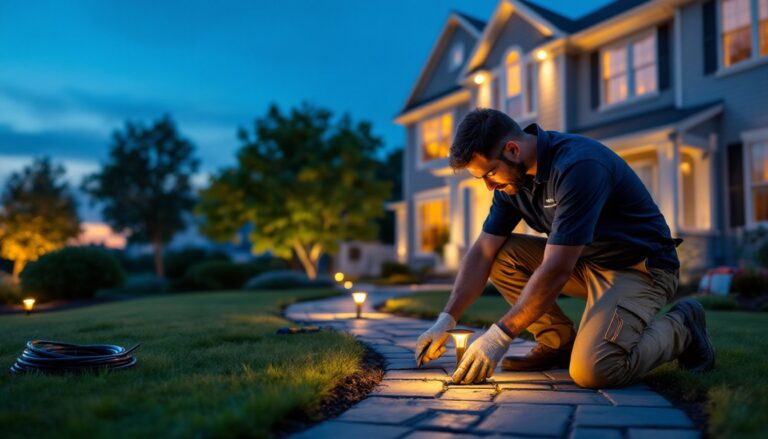
Low-voltage LED systems (12V or 24V) dominate landscape lighting for good reason. They’re safer to install than line-voltage systems, more energy-efficient, and easier to modify. A typical setup includes a weatherproof transformer (150W to 300W capacity), 12/2 or 14/2 low-voltage cable rated for direct burial, and individual fixture runs.
For pathway lights, look for fixtures with copper or marine-grade aluminum housings. Copper develops a protective patina that actually improves corrosion resistance over time. Avoid painted finishes, they’ll chip and peel in coastal humidity. Expect to pay $40-$80 per quality fixture versus $15-$25 for big-box store versions that won’t survive two hurricane seasons.
Accent lighting for palms, architectural features, or tropical plantings works best with adjustable-beam LED bullet lights (3W-7W per fixture). Position them to graze walls or uplight canopy foliage. Because Naples landscapes lean heavily on palms, sabal palms, and dramatic tropical plants featured in garden design ideas, uplighting creates significant visual impact after dark.
Deck and patio lighting should use fixtures rated for wet locations, not just damp. There’s a difference: wet-rated fixtures can handle direct water exposure, while damp-rated ones cannot. For covered lanais, damp ratings suffice. For pool decks or uncovered patios, wet-rated is mandatory per NEC Article 410.
One note on installation: bury low-voltage cable at least 6 inches deep and use conduit under hardscaping. Tree roots and landscape maintenance are constant threats. Mark cable runs on a property diagram, future you will appreciate it when replanting beds.
Security and Motion-Sensor Lighting
Motion-sensor floodlights remain the most cost-effective security deterrent. Modern LED units draw 20-30W (equivalent to old 150W halogens) and last 25,000+ hours. Look for adjustable sensitivity, timer duration (5-20 minutes), and dual-head designs that allow independent aiming.
For coastal installation, fixtures should have bronze or powder-coated aluminum housings with silicone-gasketed lens covers. Check that the motion sensor itself is sealed, cheap units let moisture into the PIR sensor, causing false triggers or complete failure.
Dusk-to-dawn fixtures with photocell sensors work well for areas needing constant overnight illumination: driveways, side gates, or dock areas. These typically use 15W-25W LEDs and cost $2-4 per month to operate year-round.
One practical consideration: aim motion sensors carefully. Florida’s palm fronds move constantly in evening breezes, and small lizards are everywhere. Position sensors to cover entry points, doors, gates, walkways, not vegetation. Set sensitivity to medium rather than high to reduce false triggers.
For whole-home security systems considering smart integration, many smart home product reviews now cover outdoor lighting that syncs with cameras and home automation platforms. These work well but require stable Wi-Fi coverage extending to outdoor areas, which can be challenging in stucco homes with metal lath.
DIY Outdoor Lighting Installation Tips for Naples Properties
Line-voltage installations (120V) require permits in most Florida jurisdictions and must meet NEC code. Unless someone has experience with electrical work and is comfortable pulling permits, hire a licensed electrician for 120V circuits. It’s not just about safety, homeowner’s insurance can deny claims if unpermitted electrical work causes a fire.
Low-voltage systems are DIY-friendly and don’t typically require permits (confirm with local building department). Here’s the basic process:
-
Plan the layout on paper first. Calculate total wattage to size the transformer (add 20% buffer capacity). Most residential transformers range from 150W to 600W.
-
Mount the transformer near a GFCI-protected outdoor outlet, elevated at least 12 inches off the ground (Florida’s heavy rains can create ground-level flooding). The transformer needs ventilation, don’t stuff it behind shrubs.
-
Run cable in straight lines where possible. Low-voltage cable can lose significant voltage over distance (10%-15% loss over 100 feet is common with 12-gauge wire). For runs over 50 feet, use 12-gauge instead of 14-gauge, or split into multiple runs.
-
Connect fixtures using waterproof wire connectors filled with dielectric grease. The crimp-and-gel connectors work better long-term than twist-on caps in humid environments.
-
Test before burial. Run the system for 30 minutes to confirm all fixtures work and brightness is even across the run.
Tool requirements are minimal: wire strippers, voltage tester, spade or trenching shovel, and possibly a drill for mounting fixtures to hardscape. For larger projects, rent a manual edger ($15/day) to cut clean cable trenches along walkways.
Safety gear: Work gloves, safety glasses, and sun protection. Even late afternoon sun in Naples can cause burns during multi-hour outdoor projects.
One common mistake: overloading transformer zones. If using a multi-tap transformer, distribute fixtures evenly across taps rather than loading one tap heavily. This prevents voltage drop issues on individual runs.
Choosing Weather-Resistant Fixtures for Coastal Conditions
Material selection determines longevity in coastal environments. Here’s what holds up:
- Marine-grade stainless steel (316): Best corrosion resistance. Expensive but worth it for high-visibility fixtures. Grade 304 stainless will still rust in salt air.
- Solid copper or brass: Develops protective patina. Avoid lacquered finishes, they fail quickly and trap moisture underneath.
- Powder-coated aluminum: Good mid-range option if the coating is thick (3+ mils). Inspect annually for chips that expose bare metal.
- High-grade composites: Some modern fixtures use fiberglass-reinforced polymer housings that resist corrosion entirely. They won’t dent like metal but can crack if struck.
Avoid: Plated finishes (chrome, nickel, brushed nickel over pot metal), standard steel, and any fixture with exposed ferrous metal components.
Lens and gasket materials matter as much as housings. Look for:
- Tempered glass lenses (not acrylic or polycarbonate) for fixtures that stay clear and scratch-resistant
- Silicone gaskets rather than rubber or foam
- Stainless steel hardware for any screws, hinges, or mounting brackets
IP ratings indicate water/dust protection. For Naples:
- IP65: Minimum for exposed fixtures (protected against water jets)
- IP67: Better for low-mounted lights that might sit in standing water
- IP68: Overkill for most applications except underwater pool lights
Be aware that IP ratings don’t account for salt air corrosion, they only measure water/dust ingress.
For anyone researching current fixture technologies and material innovations, smart home technology news often covers outdoor lighting developments including new corrosion-resistant materials and sealed electronics.
Maintenance schedule: Even quality fixtures need care. Every six months, rinse fixtures with fresh water to remove salt buildup, check gasket integrity, and apply dielectric grease to connections. Annual inspections should include voltage testing at fixtures (should read within 10% of transformer output) and checking for corroded wire connections.
Energy-Efficient Outdoor Lighting Solutions
LED technology has made incandescent and even CFL outdoor lighting obsolete for most applications. The numbers are compelling:
- A 7W LED produces the same light output as a 60W incandescent
- LED lifespan averages 25,000-50,000 hours versus 1,000-2,000 for incandescent
- LEDs generate less heat, reducing fire risk and fixture degradation
Color temperature affects both aesthetics and functionality. For Naples landscapes:
- 2700K-3000K (warm white): Best for architectural accent lighting, creates inviting ambiance
- 3500K-4000K (neutral white): Good for pathway and security lighting, better color rendering for plants
- 5000K+ (cool white): Too harsh for residential use: stick to commercial/industrial applications
Solar-powered fixtures work well in sunny Naples but have limitations. They’re ideal for pathway marking in remote areas where running cable is impractical. But:
- Light output is significantly lower than wired systems
- Battery life degrades after 2-3 years, requiring replacement
- Cloudy days reduce charge, leading to shorter runtime
- Not suitable for security applications requiring reliable all-night operation
If using solar fixtures, spend $30-$60 per unit for ones with replaceable lithium-ion batteries and monocrystalline solar panels. The $10 big-box specials will disappoint.
Smart controls add efficiency without sacrificing functionality:
- Timers and photocells: Basic automation that ensures lights run only when needed. A mechanical timer costs $12-$25: digital versions offer more programming flexibility.
- Dimming capability: LED systems can often dim to 10%-20% output for ambient lighting, then brighten on motion detection. This extends fixture life and reduces energy use.
- Zoning: Separate landscape lighting into zones (front yard, back patio, accent lighting) controlled independently. No need to light the entire property every night.
Operating cost example: A typical 10-fixture LED landscape lighting system (70W total) running 8 hours nightly costs approximately $2-$3 per month at Florida’s average residential rate of $0.12-$0.14 per kWh. The same system using halogen fixtures would cost $15-$20 monthly.
Transformer efficiency also matters. Modern electronic transformers are 85%-95% efficient versus 50%-70% for older magnetic transformers. When replacing a system, upgrading the transformer pays back quickly in reduced energy waste.