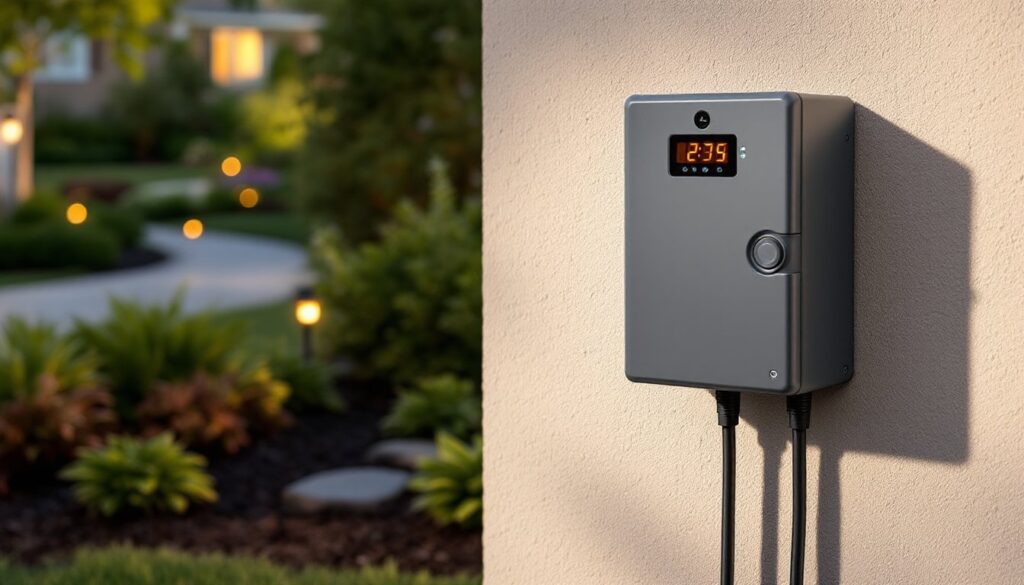
A 12V landscape lighting transformer is the unsung workhorse behind every professionally lit yard, pathway, and garden feature. Without it, those LED spotlights and path lights wouldn’t glow. This step-down device converts standard 120V household current into safe, low-voltage power that runs through buried cable to dozens of fixtures without the shock hazard or permitting headaches of line voltage. Whether you’re adding curb appeal or extending usable hours in the backyard, choosing the right transformer, and installing it correctly, makes the difference between a system that shines for a decade and one that flickers out after the first winter.
Table of Contents
ToggleKey Takeaways
- A 12V landscape lighting transformer safely converts household 120V power to low-voltage output, eliminating shock hazards and allowing permit-free DIY installation in most areas.
- Always oversize your transformer by 20–25% beyond your calculated wattage load to prevent overheating, tripped breakers, and shortened lifespan.
- Use 10 AWG cable for runs longer than 75 feet and leverage multi-tap outputs (13V, 14V, or 15V) to compensate for voltage drop on extended cable runs.
- Mount the 12V landscape lighting transformer at least 12 inches above grade on a weatherproof exterior wall near a GFCI outlet to prevent water intrusion and ensure long-term reliability.
- Label all zones and terminal connections clearly, check voltage at the farthest fixture with a multimeter, and perform annual maintenance to catch issues before outages occur.
What Is a 12V Landscape Lighting Transformer and Why You Need One
A landscape lighting transformer steps down your home’s 120-volt AC power to 12 volts, making it safe to run through buried or surface-laid cable to outdoor light fixtures. This low voltage minimizes shock risk, you can touch an energized 12V wire with bare hands and feel nothing, and allows DIYers to install lighting without an electrician or electrical permit in most jurisdictions. (Always verify local code: some municipalities still require permits for any outdoor wiring.)
Most transformers mount to an exterior wall near a GFCI-protected outlet or are hardwired into a weatherproof junction box. Inside the weatherproof enclosure, you’ll find a toroidal or EI-core transformer coil, terminal blocks for attaching low-voltage cable, and often a built-in timer or photocell to automate on/off cycles. Higher-end models include multi-tap outputs at 12V, 13V, 14V, and 15V, letting you compensate for voltage drop on long cable runs, a fixture 100 feet from the transformer can see significant dimming if you don’t bump the tap voltage.
Why not just use 120V fixtures? Safety and flexibility. Low-voltage systems let you add, move, or remove fixtures mid-season without shutting off breakers or worrying about code-compliant conduit burial depths. Bulbs and LEDs designed for 12V also tend to last longer and deliver warmer, more controllable light than their line-voltage counterparts.
Key Features to Look for When Choosing a Landscape Lighting Transformer
Not all transformers are created equal. A 150-watt big-box unit might handle a dozen path lights, but it’ll choke if you later add spotlights for trees. Start by listing every fixture you plan to install, add up their wattage or LED-equivalent wattage, then multiply by 1.25 to leave headroom. If your fixtures total 200 watts, size up to at least a 250-watt transformer. Undersizing leads to overheating, tripped breakers, and shortened lifespan.
Look for stainless-steel or powder-coated enclosures rated for wet locations (UL 1838 or equivalent). Plastic housings crack in UV and freeze-thaw cycles. Terminal blocks should accept 10 AWG to 14 AWG wire, thicker wire (lower gauge) reduces voltage drop on runs longer than 50 feet. Quality models include built-in circuit breakers or fuses for each output tap: if a cable gets nicked by a shovel, only that zone goes dark instead of the whole system.
Check mounting options. Wall-mount transformers need a weatherproof cover and should sit at least 12 inches above grade to avoid splash and snow buildup. Stake-mount units work in flower beds but are harder to service and more prone to moisture infiltration.
Wattage Capacity and Load Calculation
Wattage capacity is the transformer’s maximum continuous output, typically ranging from 45 watts (starter kits) to 900 watts (commercial-grade). To calculate your load, note that a 4-watt LED path light draws 4 watts, a 7-watt spot draws 7 watts, and so on. If you’re replacing halogen bulbs with LEDs, use the new LED wattage, don’t assume the old 20W halogen fixture still pulls 20W with a 4W LED retrofit.
For voltage drop, use this rule: on 12 AWG cable, plan no more than 100 watts per 100-foot run at 12V to keep voltage above 10.8V at the farthest fixture. Drop below that and LEDs dim noticeably or shift color. Multi-tap transformers let you dial up to 15V at the source, so the last fixture still sees 12V after losses. Home automation reviews often highlight transformers with app-based voltage monitoring, a useful feature for troubleshooting dim zones without a multimeter.
Always leave 20–25% spare capacity. If you calculate 180 watts today, buy a 225W or 250W unit. Landscape lighting has a way of growing as you see how good it looks.
Timer and Smart Controls
Most transformers include a mechanical or digital timer to automate dusk-to-dawn cycles or custom schedules (on at sunset, off at 11 PM, on again at 5 AM). Mechanical dial timers are bulletproof but lack daylight-saving adjustments. Digital timers with astronomic settings calculate sunrise and sunset for your ZIP code and adjust throughout the year, no manual tweaking.
For deeper integration, choose a transformer with a low-voltage relay input or built-in Wi-Fi. You can then control it via a smart-home hub, voice assistant, or dedicated app. This is especially handy if you travel: instead of leaving lights on a fixed schedule, you can toggle them remotely or sync them with security cameras. Some units support zone control, letting you run path lights all night but shut off accent spots at midnight to save energy.
Photocells are standard on mid-range models. They turn the system on automatically at dusk and off at dawn, overriding the timer. If your yard has streetlights or a bright porch fixture, mount the photocell where it won’t false-trigger from stray light.
How to Install a 12V Landscape Lighting Transformer (Step-by-Step)
Safety first: Confirm the outlet you’ll use is GFCI-protected (test the “Test” button to verify) and on a dedicated 15A or 20A circuit if you’re running a large transformer. Wear safety glasses when drilling into masonry or cutting cable.
Materials & tools:
- Transformer (sized per your load calculation)
- 12 AWG or 10 AWG low-voltage landscape cable (copper, direct-burial rated)
- Wire strippers, screwdriver set, drill with masonry bit (if mounting to brick/concrete)
- Stainless-steel screws or masonry anchors
- Silicone sealant (for cable entry points)
- Multimeter (optional but recommended)
Step-by-step:
-
Choose the mounting location. Pick an exterior wall within 6 feet of a GFCI outlet, at least 12 inches above ground, and sheltered from direct rain if possible. Avoid south-facing walls in hot climates, transformers already generate heat and don’t need full sun.
-
Mount the transformer. Hold the unit against the wall, level it, and mark screw holes. For wood siding, drive stainless screws into studs or use exterior-rated anchors. For brick or block, drill with a masonry bit and use plastic or metal sleeve anchors. Tighten until snug but don’t overtorque plastic housings.
-
Plug in or hardwire. If using a plug-in model, insert the transformer’s cord into the GFCI outlet. For hardwired installations, turn off the breaker, remove the knockout on the transformer’s side, feed 14/2 or 12/2 NM cable (depending on circuit size) through a weatherproof connector, and wire hot to brass, neutral to silver, ground to green inside the box. Many hands-on DIY tutorials recommend hiring an electrician for hardwired setups if you’re not confident with junction boxes and code-compliant connections.
-
Run low-voltage cable. Lay cable along your planned fixture route. Bury it 6 inches deep in a shallow trench or secure it with landscape staples if running on mulch. Keep cable at least 6 inches from sprinkler lines and 12 inches from gas or water pipes. Use a separate cable run for each zone or leg to simplify troubleshooting.
-
Connect cable to transformer. Strip ½ inch of insulation from each conductor. Loosen the terminal screws on the transformer’s output taps, insert the wire (red to one terminal, black to the other, polarity doesn’t matter for incandescent or most LEDs), and tighten. Some models use push-in connectors: follow the manufacturer’s instructions. Double-check that no stray strands bridge terminals.
-
Set the timer and voltage tap. If your transformer has multi-tap outputs, start at 12V for runs under 50 feet or 13V/14V for longer runs. Program the timer for your desired schedule (e.g., dusk to 11 PM). If using a photocell, test it by covering the sensor with your hand, lights should turn on within a few seconds.
-
Test and adjust. Flip the breaker or timer to “On.” Walk the cable run and confirm every fixture lights up. Use a multimeter to check voltage at the farthest fixture: aim for 10.8V to 12V. If it’s below 10.8V, bump the tap up one notch or split the load across two cable runs.
-
Seal cable entry. Apply a small bead of silicone sealant around the cable where it enters the transformer housing to block moisture and insects. Don’t use expanding foam, it can push housings apart.
Common Mistakes to Avoid With Your Landscape Lighting Transformer
Undersizing the transformer is the number-one failure mode. Homeowners count fixtures but forget to add wattage or leave zero headroom. A maxed-out transformer runs hot, trips breakers, and shortens component life. Always oversize by 20–25%.
Ignoring voltage drop leads to dim, discolored lights at the end of long runs. Home tech trends show that even quality LEDs shift from warm white to sickly yellow when starved of voltage. Use 10 AWG cable for runs over 75 feet, or split the load across multiple outputs. Multi-tap transformers are your friend, don’t leave them set at 12V if your system needs 14V.
Mounting too low invites water intrusion. Splash from rain, sprinklers, or snow melt can seep into terminal blocks and corrode connections. Keep the transformer at least 12 inches above grade and ensure the enclosure faces down or away from prevailing weather.
Mixing fixture types carelessly can cause problems. Halogen and LED fixtures have different voltage tolerances and current draw. If you retrofit halogens to LED, re-calculate your load and check that the transformer’s minimum load rating is met, some transformers won’t fire up if total draw is too low.
Skipping wire connectors or using cheap ones is a recipe for failure. Twist-on wire nuts aren’t rated for buried, damp environments. Use silicone-filled direct-burial connectors or the manufacturer’s proprietary quick-connects. Crimp and seal every splice.
Forgetting to label zones makes troubleshooting a nightmare. Use a label maker or permanent marker to tag each terminal: “Front Path,” “Tree Spots,” “Deck Uplights.” Six months from now, when one zone goes dark, you’ll thank yourself.
Overloading a single cable run is easier than you think. Twelve 4-watt path lights plus three 10-watt spots equal 78 watts, manageable. But if you daisy-chain them all on 14 AWG wire over 80 feet, the last fixture will barely glow. Split into two runs or upgrade to 12 AWG.
Finally, neglecting annual maintenance shortens system life. Once a year, check terminal screws for tightness, inspect cable insulation for nicks or UV damage, clean the photocell lens, and verify the timer still matches sunrise/sunset. A ten-minute checkup in spring prevents outages in December.
Conclusion
A properly sized and installed 12V transformer delivers years of reliable, low-maintenance outdoor lighting. Size it with headroom, mount it high and weatherproof, run adequate wire gauge, and take five minutes to program the timer. Skip those steps and you’ll spend more time troubleshooting than enjoying the glow. Do it right once, and the hardest part of landscape lighting becomes deciding which tree to spotlight next.