Outdoor lighting does more than brighten walkways, it extends usable space, improves safety, and adds curb appeal long after sunset. But stringing up a few floodlights won’t cut it if you want balanced illumination that flatters architecture and landscaping. That’s where professional landscape lighting service comes in. From low-voltage path lights to uplighting specimen trees, skilled installers bring design know-how, electrical expertise, and fixtures built to withstand weather. Whether you’re hosting evening gatherings or simply want to showcase your property’s best features, understanding what these services offer helps you make a smart investment.
Table of Contents
ToggleKey Takeaways
- Professional landscape lighting service combines design, installation, and maintenance of low-voltage outdoor electrical systems that enhance safety, security, and curb appeal while extending your usable outdoor space.
- Quality landscape lighting fixtures use commercial-grade materials like brass, copper, or powder-coated aluminum with sealed gaskets, which resist corrosion and UV damage far longer than plastic alternatives from box-store kits.
- Expect to budget $2,000–$5,000 for a typical front-yard landscape lighting installation with 10–15 fixtures, though high-end projects with smart controls and integrated hardscape lighting can reach $8,000–$12,000.
- Professional installers prevent voltage drop and ensure code-compliant safety by using proper cable gauges, correct burial depth (6 inches minimum), waterproof connectors, and GFCI-protected transformers on the electrical input side.
- Choose a landscape lighting service provider who walks your property at dusk, provides itemized quotes with specific transformer wattage and fixture models, offers night-time portfolio photos, and includes annual maintenance or smart scheduling controls.
- DIY landscape lighting works for simple, single-zone projects like a straight walkway with a few path lights, but complex designs, multilevel terraces, and specimen-tree uplighting benefit significantly from professional design expertise and warranties.
What Is Landscape Lighting Service and Why Does It Matter?
Landscape lighting service covers design, installation, and maintenance of outdoor electrical lighting systems. Unlike indoor fixtures on standard 120‑volt circuits, most residential landscape systems run on low-voltage (12‑volt or 24‑volt) lines fed by a transformer. Professionals map out fixture placement, trench cable runs, mount and aim lights, and tie everything into a timer, photocell, or smart-home controller.
Why hire a pro instead of buying a box-store kit? Three reasons. First, electrical safety: even low-voltage wiring needs correct gauge wire, waterproof connectors, and proper burial depth (usually 6 inches minimum). Second, design expertise: a good installer balances task lighting (illuminating steps and gates), accent lighting (highlighting focal points), and ambient lighting to avoid hot spots or dark voids. Third, durability: commercial-grade fixtures use brass, copper, or powder-coated aluminum with sealed gaskets, materials that resist corrosion and UV damage far longer than plastic housings.
Beyond aesthetics, proper lighting deters intruders and prevents trips and falls on uneven pavers or stairs. Insurance claims for outdoor injuries often cite poor visibility, making functional lighting a practical risk-mitigation measure. If you’re selling, well-executed landscape lighting can lift curb appeal as much as fresh paint or new sod.
Types of Landscape Lighting Services for Your Home
A full-service provider offers several fixture styles and installation techniques. Below are the two most common categories homeowners request.
Path and Walkway Lighting
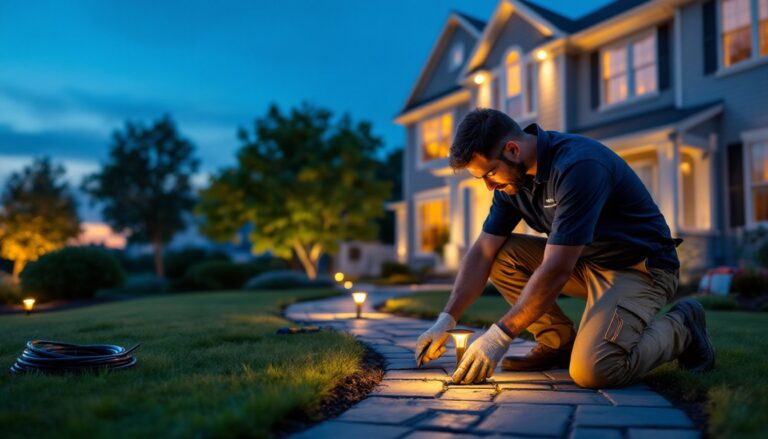
Path lights sit on short stakes or bollards (typically 18–24 inches tall) and cast pools of light downward. They mark edges, illuminate grade changes, and guide guests from driveway to front door. Installers space them 8–10 feet apart along straight runs: tighter spacing works around curves or steps.
Look for fixtures with shielded bulbs or frosted lenses to reduce glare. Bare LED chips aimed at eye level create discomfort and wash out surrounding plantings. Most pros use 3‑watt to 5‑watt LEDs per path light, enough output to see footing without overpowering adjacent garden beds. Wire runs daisy-chain from the transformer, and quality installers use direct-burial UF cable or low-voltage landscape cable rated for wet locations.
Accent and Uplighting for Trees and Architecture
Uplighting places a fixture at ground level, aiming a narrow or wide beam upward to graze a tree trunk, column, or textured wall. This technique adds drama and depth. For deciduous trees, position the fixture 2–3 feet from the trunk: evergreens with dense canopies may need the light closer or a higher-wattage lamp.
Downlighting, also called moonlighting, mounts fixtures in tree branches or under eaves, casting soft pools below. It mimics natural light and works well over patios or seating areas. Installers secure the fixture to a sturdy branch with stainless-steel straps (never nails or screws that girdle growth) and run cable down the trunk inside conduit to protect against squirrels and weather.
Other accent options include wash lights (wide, even illumination across facades), well lights (recessed in-ground fixtures for uplighting without a visible housing), and hardscape lights (built into retaining-wall caps or stair risers). Each serves a specific design goal, and a skilled lighting designer will layer multiple types to create balanced, three-dimensional nighttime scenes.
How to Choose the Right Landscape Lighting Service Provider
Start by verifying the contractor holds a valid electrical license if your jurisdiction requires one for low-voltage outdoor work. Some states exempt 12‑volt systems from full electrician licensing, but a reputable installer will still carry general liability insurance and ideally workers’ compensation coverage.
Ask to see a portfolio of completed projects, photos taken at night, not during the day. Pay attention to beam control: you should see highlighted features, not glaring lamps. Request references and check online reviews on platforms that verify jobs, such as local lighting professionals, where homeowners post before-and-after feedback.
During the estimate, the installer should walk your property at dusk or after dark. Daytime site visits miss shadows, ambient light from neighbors, and how existing landscape elements look under artificial illumination. A thorough quote will itemize:
- Transformer size and brand (rated in watts: common residential units range from 150 W to 600 W)
- Fixture count, model numbers, and materials
- Cable gauge (14 AWG or 12 AWG for longer runs to minimize voltage drop)
- Trenching depth and restoration method (hand-dig versus mechanical trencher)
- Warranty terms for both fixtures and labor
Beware of vague line items like “lighting package.” You’re paying for specific hardware and labor hours: details matter. Also confirm whether the proposal includes a photocell or smart controller for automatic on/off scheduling and dimming. Manual timers work, but they drift with seasonal sunrise/sunset shifts.
Finally, ask how the company handles service calls. Quality providers offer annual maintenance, cleaning lenses, re-aiming fixtures after plant growth, checking connections, and some bundle it into the install price.
DIY vs. Professional Landscape Lighting: What Homeowners Need to Know
If you have basic electrical skills and a simple layout, say, a straight walkway with six path lights, a DIY kit from a home center can work. You’ll get a transformer, fixtures, wire, and connectors for a few hundred dollars. Follow the manufacturer’s wiring diagrams, bury cable at least 6 inches deep (check local code), and use silicone-filled wire nuts or twist-on connectors rated for wet locations.
But DIY has limits. Voltage drop is the silent killer of low-voltage systems: if you daisy-chain too many fixtures on one run or use undersized wire, lights at the end of the line dim or flicker. Calculating voltage drop requires measuring cable length, adding fixture wattages, and consulting voltage-drop tables, math that’s straightforward but easy to botch. Pros use the hub method (multiple home-run cables from the transformer) or T-method to balance loads and keep voltage within ±10 percent of nominal.
Safety is another consideration. While 12‑volt shocks won’t kill you, the transformer’s 120‑volt input side does require proper outdoor-rated GFCI protection and weatherproof enclosure. If you’re not comfortable pulling a circuit from your main panel or installing a GFCI receptacle, hire a licensed electrician for that portion and handle the low-voltage fixtures yourself.
Complex projects, multilevel terraces, specimen-tree uplighting, integrated smart controls, benefit from professional design. Design platforms like Houzz showcase portfolios that illustrate advanced lighting techniques you might not imagine on your own. And if your HOA or local municipality requires a permit for trenching or electrical work, a licensed contractor streamlines that process.
Bottom line: DIY saves money on simple, single-zone installs. Hire a pro when you want layered design, robust warranties, and code-compliant installation without trial-and-error.
Cost Considerations for Landscape Lighting Installation and Maintenance
Pricing varies by fixture count, property size, and complexity. As a rough benchmark, expect $2,000–$5,000 for a typical front-yard installation with 10–15 fixtures, a 300‑watt transformer, and trenching. High-end projects with brass fixtures, smart controls, and extensive hardscape integration can push $8,000–$12,000 or more.
Break down costs into three buckets:
- Materials: Budget transformers start around $150: commercial-grade units with multiple taps and timers run $300–$600. Fixtures range from $40 for basic path lights to $200+ for heavy-duty brass uplights or integrated well lights. Wire and connectors add $1–$2 per linear foot.
- Labor: Installers typically charge $50–$100 per hour, and a moderate project takes one to two days. Trenching rocky soil or working around irrigation lines adds time. Some pros quote per fixture ($75–$150 each, installed).
- Permits and inspections: Most jurisdictions don’t require permits for low-voltage landscape lighting, but always confirm. If trenching crosses a public easement or you’re tapping a new circuit, a permit may be mandatory.
Ongoing costs include electricity and maintenance. LED fixtures draw minimal power, a 15‑fixture system running five hours nightly uses roughly 25 kWh per month, or about $3–$5 depending on your rate. Annual maintenance (lens cleaning, bulb replacement for non-LED systems, timer adjustments) runs $150–$300 if you hire it out: DIYers can handle it for the cost of replacement lamps and an afternoon.
When comparing bids, don’t choose solely on price. A low estimate might use plastic fixtures, underspecced transformers, or skip warranties. Platforms like HomeAdvisor provide cost calculators and vetted contractor matches, but always verify credentials and read reviews independently. Remember: quality materials and skilled labor prevent callbacks and premature failures. Spending an extra 20 percent upfront often yields a system that lasts a decade or longer with minimal fuss.
Finally, consider phased installation. Start with high-impact zones, front entry, patio, key specimen trees, and expand later as budget allows. A well-designed transformer and wiring layout accommodate future fixtures without major rework.