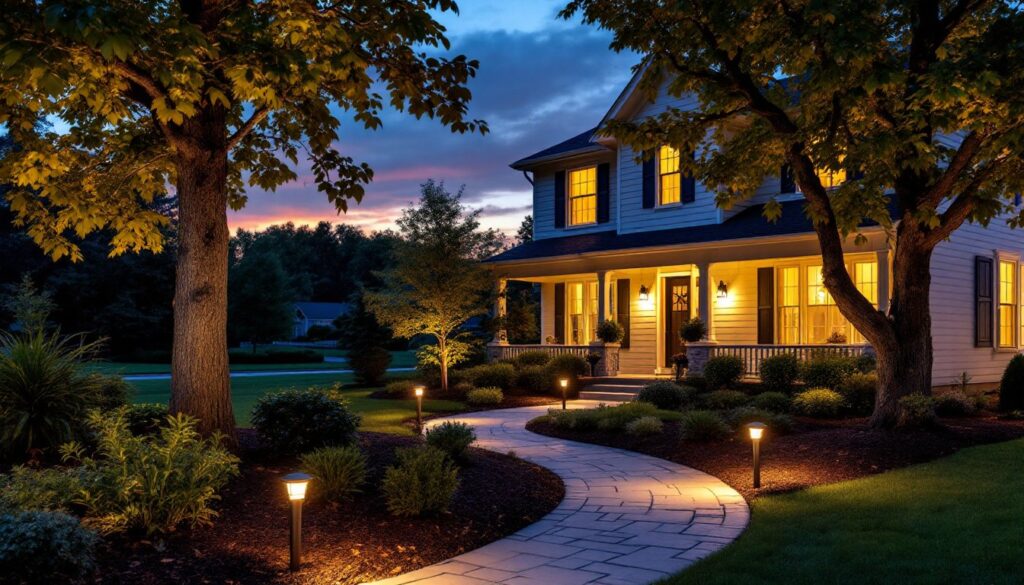
Low voltage landscape lighting runs on 12 volts instead of standard 120-volt household current, making it safer, easier to install, and more energy-efficient for outdoor applications. Unlike line-voltage systems that require buried conduit and electrical permits in most jurisdictions, low voltage setups use a plug-in transformer and can be handled by most DIYers in a weekend. The right system highlights pathways, accents architectural features, and extends usable outdoor time after sunset, without the shock risk or the electrician’s bill. This guide covers what makes low voltage the go-to choice for residential landscapes, which kits deliver real value, and how to install them correctly the first time.
Table of Contents
ToggleKey Takeaways
- Best low voltage landscape lighting operates on 12 volts instead of standard 120-volt current, making it safer, easier to install, and ideal for DIY homeowners without requiring electrical permits.
- LED fixtures in quality low voltage systems draw only 3–8 watts per lamp versus 25–60 watts for line-voltage equivalents, reducing annual operating costs to just $15–$25 for a typical 8-fixture pathway system.
- Premium brass or copper fixtures last 15–20 years with minimal maintenance, while budget plastic options typically fail within 3–5 years due to UV exposure and freeze-thaw cycles.
- Proper transformer sizing at 125% of total fixture wattage, combined with appropriate wire gauge (12-gauge for runs over 75 feet, 14-gauge for 50–75 feet), prevents voltage drop and dimming issues.
- Strategic placement with path lights spaced 8–10 feet apart, spotlights angled 30–45° upward, and cable buried 6 inches deep ensures safe, efficient operation and long-term system reliability.
Why Low Voltage Landscape Lighting Is the Smart Choice
Safety is the standout reason. At 12 volts, accidental contact won’t deliver a lethal shock, a critical factor when wiring runs near sprinklers, garden beds, or areas kids and pets frequent. Most jurisdictions don’t require permits for low voltage installations, though it’s always worth confirming local code.
Energy efficiency follows closely. LED low voltage fixtures draw 3–8 watts per lamp versus 25–60 watts for incandescent line-voltage equivalents. A typical 8-fixture pathway system might cost $15–$25 per year to run, assuming $0.13/kWh. Transformers sized at 150–300 watts handle most residential yards without straining your electric bill.
DIY-friendly installation seals the deal. No conduit trenching, no junction boxes, no inspections. Cable burial depth is typically 6 inches (check local frost line and IRC amendments), and most manufacturers supply direct-burial 12- or 14-gauge wire rated for wet locations. Mistakes, like undersized wire runs or loose connections, won’t start fires, though they will dim lights or trip the transformer’s built-in overload.
Flexibility matters for evolving landscapes. Adding fixtures mid-run requires only wire stripping and a waterproof splice connector. Moving a spotlight to accent a newly planted tree takes minutes, not a service call. Timers, photocells, and smart controls integrate easily at the transformer, letting homeowners automate dusk-to-dawn operation or vacation schedules.
Top Low Voltage Landscape Lighting Systems for Homeowners
Best Overall: Premium Path and Spotlight Kits
Brass or copper construction defines premium kits. These materials resist corrosion in wet climates and age to a natural patina that blends with mature gardens. Fixtures with integrated LED modules (3000K warm white) deliver 200–300 lumens per head, enough to light a pathway or wash a wall without glare. Look for kits that include a transformer with photocell and timer, 14-gauge cable (not undersized 16-gauge), and cast metal stakes rather than flimsy plastic.
Premium systems typically bundle 6–8 fixtures with a 200-watt transformer, covering 100–150 linear feet of pathway or a mix of path lights and accent spots. Expect $350–$600 per kit. The investment pays off in longevity: quality fixtures last 15–20 years with minimal maintenance, while budget plastic housings crack under UV exposure and freeze-thaw cycles within 3–5 years.
Modular design lets homeowners expand later. Buy the transformer sized for future growth (300 watts handles up to 25 LED fixtures), then add compatible heads as budget allows. Some manufacturers offer matching well lights, deck lights, and hardscape strips for a cohesive look.
Best Budget-Friendly: Affordable Starter Sets
Starter kits in the $100–$200 range use composite or aluminum housings and 10–12 watt integrated LEDs. They’re sufficient for renters, first-time DIYers, or homeowners testing layouts before committing to permanent fixtures. Many low-voltage outdoor lighting options in this category include 6–10 plastic stake lights, a 150-watt transformer with basic timer, and 50 feet of 16-gauge wire.
Trade-offs are real. Plastic lenses yellow after 2–3 years of UV exposure, reducing light output. Thin-gauge wire limits total run length, 16-gauge maxes out around 50 feet from the transformer before voltage drop dims the furthest fixtures noticeably. Stake mounts loosen in soft soil, requiring seasonal adjustment.
Best use cases: temporary lighting for events, seasonal accents (holiday displays, spring bulb beds), or trial runs to determine optimal fixture spacing and beam angles before investing in permanent gear. If the layout works, homeowners can reuse the transformer and wire, swapping in higher-quality fixture heads.
Key Features to Look for When Choosing Low Voltage Lights
Transformer capacity drives system performance. Calculate total wattage by adding fixture draw (check spec sheets, LED path lights typically pull 3–5 watts, spots 5–8 watts). Size the transformer at 125% of total load to avoid overheating. A 200-watt transformer comfortably handles 160 watts of fixtures. Built-in photocells automate on/off cycles: timers let users set run duration (4-hour, 6-hour, dusk-to-dawn). Digital models with battery backup preserve settings during power outages.
Fixture material determines lifespan. Brass and copper top the durability list, followed by powder-coated aluminum and stainless steel. Avoid bare aluminum (corrodes in coastal or high-pH soil) and thin plastic (cracks below 20°F). Tempered glass lenses resist impact and thermal shock better than acrylic, which scratches easily and hazes over time.
LED color temperature affects ambiance. 2700K mimics incandescent warmth, ideal for entertaining areas. 3000K balances warmth and visibility, the go-to for pathways and steps. 4000K+ skews cool and commercial, fine for security lighting, harsh for gardens. CRI (Color Rendering Index) above 80 shows plant foliage and hardscape colors accurately.
Beam angle dictates coverage. Flood (60–120°) washes walls, fences, and wide plantings. Spot (15–40°) accents tree canopies, sculptures, or architectural details. Path lights with 180° shields direct light downward, reducing glare and light trespass into neighbors’ yards. Adjustable heads offer flexibility but add mechanical complexity, more moving parts mean more maintenance.
Wire gauge and length prevent voltage drop. Use 12-gauge for runs over 75 feet or total loads above 100 watts. 14-gauge handles 50–75 feet at moderate loads. 16-gauge is limited to short runs (under 50 feet) and low total wattage. Direct-burial cable rated UF (Underground Feeder) or equivalent meets NEC standards for wet locations.
Installation Tips for DIY Low Voltage Landscape Lighting
Prep work starts with a layout plan. Walk the yard at dusk to identify dark zones, trip hazards, and focal points (mature trees, water features, entryways). Mark fixture locations with landscaping flags. Path lights space 8–10 feet apart for even coverage: closer spacing (6 feet) suits steps or slopes. Spotlights sit 6–10 feet from the target, angled 30–45° upward to avoid ground spill.
Transformer placement requires a GFCI-protected outdoor outlet within cord reach (most cords run 6 feet: extension cords void warranties). Mount the transformer 12–18 inches above ground on a post, fence, or exterior wall to keep it above snow and splashback. Level mounting prevents internal component stress. Run the low voltage cable away from the transformer in a hub pattern (one main run with branches) rather than a long daisy chain, which compounds voltage drop.
Trenching protects cable from mower blades and foot traffic. Use a flat spade or trenching shovel to cut a 6-inch-deep slit along the layout path. In rocky soil, a pointed spade or mattock works better. Lay the cable in the trench without stretching it tight, leave 10–15% slack to accommodate soil settlement and frost heave. Backfill with native soil, tamping lightly to avoid air pockets. Mark cable routes on a yard sketch for future reference (sprinkler installs, fence posts, etc.).
Fixture connections use twist-on waterproof connectors (supplied with most kits) or piercing connectors that clamp onto the main cable without stripping. Piercing types speed installation but can corrode over time, apply dielectric grease to terminals if using them in wet climates. Test each fixture before burying the cable to confirm polarity and brightness. Reversed polarity won’t damage LEDs, but it will prevent them from lighting.
Common mistakes include undersizing wire gauge, burying connections without waterproof enclosures, and placing transformers in shaded areas where photocells trigger prematurely. Another frequent error: aiming lights at eye level. Light the object, not the viewer. Shield path lights with integral louvers or hoods and tilt spotlights to wash targets from below or the side.
PPE matters even at low voltage. Wear safety glasses when cutting wire and digging to prevent soil and debris from hitting eyes. Work gloves protect against sharp cable ends and metal fixture edges. If the site has known underground utilities, call 811 for locates, even shallow trenching can nick irrigation lines or telecom cables.
Conclusion
Low voltage landscape lighting delivers safety, efficiency, and flexibility that line-voltage systems can’t match for residential DIY applications. Choosing quality fixtures with proper transformer sizing and wire gauge prevents the dim lights and early failures that plague budget kits. Invest time in layout planning and careful trenching, and the system will provide years of reliable service with minimal upkeep.