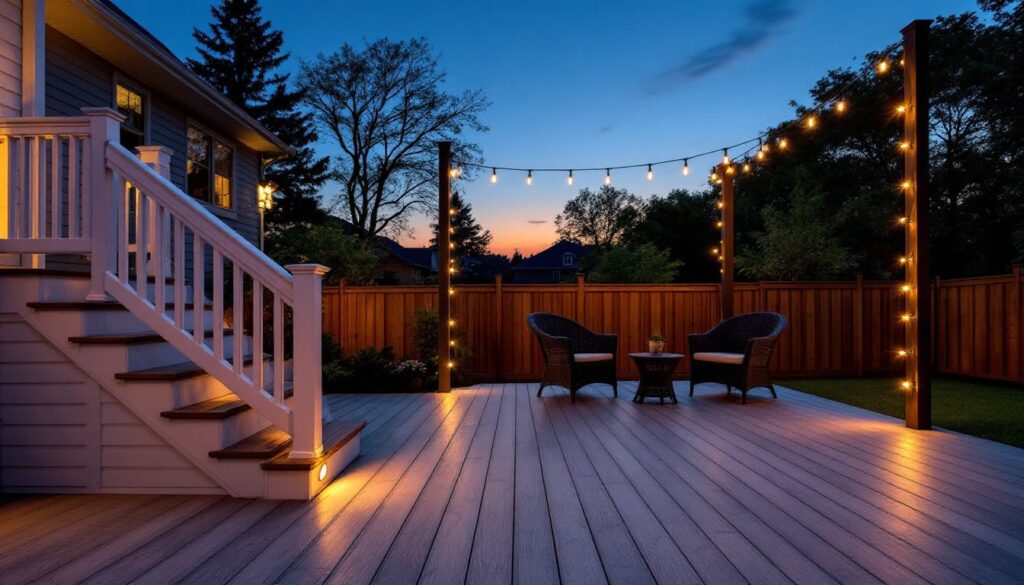
A well-lit deck transforms an outdoor space from a daylight-only zone into a functional area for evening dinners, late-night conversations, and safe navigation after dark. But deck lighting isn’t just about screwing in a couple of bulbs and calling it done. The right combination of fixtures improves safety, highlights architectural features, and sets the mood without turning your backyard into a landing strip. Whether you’re working with a new build or retrofitting an existing wood deck, understanding your options, recessed lights, post caps, solar versus low-voltage, helps you make choices that fit your budget, skill level, and the way you actually use the space.
Table of Contents
ToggleKey Takeaways
- Deck lighting serves dual purposes—preventing falls and creating inviting atmospheres—making it essential for safety compliance and homeowner’s insurance protection.
- Recessed lights, post cap lights, and string lights each offer distinct benefits, with recessed fixtures providing seamless aesthetics, post caps defining perimeters, and string lights adding character quickly.
- Stair and step lighting is critical for safety and often mandated by local building codes, with riser lights being easier to retrofit than tread lights on wood decks.
- Low-voltage systems offer consistent brightness, dimming control, and smart home integration, while solar lighting requires no wiring but depends on weather and sun exposure for performance.
- A hybrid approach combining low-voltage primary lighting (stairs, perimeter) with solar decorative accents balances upfront costs and long-term reliability for deck lighting ideas.
- Always prioritize safety lighting first, verify local building codes before installation, and ensure all outdoor fixtures are wet-location rated to prevent corrosion and failure.
Why Deck Lighting Matters for Safety and Ambiance
Deck lighting serves two primary functions: preventing trips and falls, and creating an inviting atmosphere. A deck without adequate lighting is a liability after sunset. Steps, level changes, and railings become hazards, especially for guests unfamiliar with the layout.
From a code perspective, many jurisdictions now require stair lighting on decks, particularly for multi-level structures. Check local building codes before starting any electrical work, some municipalities mandate specific lumen outputs or fixture spacing for stair treads and landings. Even if your area doesn’t enforce lighting requirements, homeowner’s insurance claims related to deck falls are common enough that proper illumination is worth the investment.
Beyond safety, lighting defines zones. Softer accent lights can highlight a seating area, while brighter task lighting over a grill or bar cart makes those spaces functional. Layering different fixture types, ambient, task, and accent, creates depth and visual interest without over-lighting the entire deck. Think of it like indoor lighting: you wouldn’t put a floodlight in every corner of your living room, so don’t do it outside either.
Recessed Deck Lighting for a Seamless Look
Recessed fixtures mount flush with the deck surface or inside riser boards, creating a clean profile that won’t snag feet or furniture legs. These lights are typically low-voltage LED units rated for wet locations, with housings made from composite or stainless steel to resist corrosion.
Installation tip: Recessed deck lights require blocking or solid backing behind the mounting surface. On a wood deck, this means installing additional framing between joists or using the existing rim joist as a backing. If you’re retrofitting an existing deck, you’ll need access from below, crawling under a low deck isn’t fun, but it beats tearing up decking boards.
Most recessed fixtures are 2 to 3 inches in diameter and draw 1 to 3 watts per light. For a typical 12×16-foot deck, plan on 8 to 12 recessed lights spaced evenly around the perimeter and near stairs. Wire them in a series on a low-voltage transformer (more on that in the solar vs. low-voltage section).
Recessed lights work especially well on composite decking, where the boards are hollow and can accommodate wiring without visible channels. On solid wood decking, you may need to route shallow grooves on the underside of boards to hide wire runs. Use exterior-rated cable and secure it with specialized lighting fixtures designed for outdoor use. Always wear safety glasses when drilling into pressure-treated lumber, the preservatives can irritate eyes and skin.
Post Cap Lights to Define Deck Boundaries
Post cap lights sit atop deck railing posts, providing downward and outward illumination that defines the deck’s perimeter. They’re one of the simplest back deck lighting ideas to install, especially if you’re building a new railing system or replacing old post caps.
Most post caps fit standard 4×4 or 6×6 nominal posts (which actually measure 3.5×3.5 or 5.5×5.5 inches). Solar post caps are the easiest retrofit, they require no wiring, just a sunny location to charge during the day. Battery-powered solar units typically provide 6 to 8 hours of light on a full charge, though output dims in winter or on cloudy days.
Low-voltage post caps deliver more consistent brightness and can be wired into the same transformer system as recessed lights. Installation involves drilling a hole through the post to run wire, then securing the fixture with screws or adhesive. Some models include a gasket or weatherproof seal to prevent moisture intrusion.
Post cap lights range from traditional lantern styles to modern flat-panel LEDs. Choose a finish that matches your railing hardware, powder-coated aluminum and stainless steel both hold up well in wet climates. Avoid cheap plastic housings: UV exposure makes them brittle within a season or two.
One common mistake: over-lighting with post caps. If every single post has a bright fixture, the deck can feel harsh and institutional. Consider lighting every other post, or use dimmer bulbs to create a softer glow. This approach is especially effective for creating ambient lighting in outdoor living spaces.
String Lights and Bistro Bulbs for Cozy Atmosphere
String lights are the fastest way to add character to a deck without running conduit or hiring an electrician. Modern LED bistro bulbs are weatherproof, shatter-resistant, and energy-efficient, pulling about 1 watt per bulb compared to 5 to 7 watts for incandescent versions.
Hanging options: String lights need sturdy anchor points. For permanent installations, mount screw eyes or cup hooks into overhead beams, fascia boards, or nearby trees. If your deck lacks overhead structure, consider adding 4×4 posts at the corners with a horizontal beam or heavy-duty galvanized wire to support the lights. Posts should be set in concrete footings at least 18 inches deep to handle wind load and wire tension.
For temporary setups, shepherd’s hooks or freestanding poles work, though they’re less stable in high wind. Always use outdoor-rated extension cords (look for a “W” in the cord designation, like SJTW) and plug into a GFCI-protected outlet. If your deck doesn’t have an exterior outlet, adding one is a straightforward job for a licensed electrician, expect to pay $150 to $300 depending on wire run length and local rates.
Spacing and bulb choice: Most string light sets space bulbs 12 to 24 inches apart. For a softer look, choose warm white or amber LEDs (2200K to 2700K color temperature). Daylight or cool white bulbs (5000K+) feel clinical outdoors. If you’re covering a large area, loop the strings in a zigzag or crisscross pattern rather than running them straight, this distributes light more evenly and adds visual interest.
Stair and Step Lighting for Enhanced Safety
Stair lighting is non-negotiable for safety. Even a single step down from a deck to a landing can trip someone in the dark. Riser lights mount on the vertical face of each step, casting light downward onto the tread below. Tread lights recess into the horizontal step surface, though these require more invasive installation.
For wood deck stairs, riser lights are easier to retrofit. Drill a hole through the riser board, fish low-voltage wire from the transformer, and secure the fixture with screws. Most riser lights are 1 to 2 inches tall and protrude slightly from the surface, choose a low-profile model to avoid catching shoe toes.
Code consideration: The International Residential Code (IRC) doesn’t mandate stair lighting, but local amendments often do. Some jurisdictions require illumination of at least 1 foot-candle (about 10 lux) at each tread. LED step lights typically output 10 to 30 lumens, so spacing fixtures every 2 to 3 steps usually meets this threshold. Check with your local building department before finalizing a design.
Solar step lights are available, but they’re best suited for stairs that receive direct sun for most of the day. Shaded stairs are better served by low-voltage fixtures. For a cohesive look, match the finish of your step lights to other deck hardware, bronze, black, or brushed nickel are common choices. Thinking about recessed lighting layouts can help you plan proper fixture spacing and transformer load.
Solar vs. Low-Voltage Lighting: Which Is Right for Your Deck?
Choosing between solar and low-voltage systems comes down to budget, sun exposure, and how much control you want over brightness and scheduling.
Solar Lighting
Pros: No wiring, no transformer, no electrician. Install in minutes with screws or adhesive. Ideal for renters or anyone who wants a reversible installation.
Cons: Light output and runtime depend on weather and panel placement. Fixtures in shaded areas or northern climates may not charge fully. Battery life is typically 2 to 3 years, after which you’ll need to replace the cells or the entire fixture. Solar lights also lack dimming or scheduling features, they turn on at dusk and off at dawn, period.
Best use cases: Post caps, small accent lights, and supplemental stair lighting on south-facing decks.
Low-Voltage Lighting
Pros: Consistent brightness, dimming capability, and integration with smart home systems or timers. A single transformer (typically 60 to 300 watts) can power dozens of lights. LED fixtures last 25,000+ hours, often outliving the deck itself.
Cons: Requires wiring, a transformer, and basic electrical knowledge. Transformers need to be plugged into a GFCI outlet or hardwired by a licensed electrician. Wire runs longer than 100 feet may experience voltage drop, requiring a larger gauge wire (14 AWG instead of 16 AWG) or a second transformer.
Installation tip: Bury low-voltage wire 6 inches deep if running it across a yard, or staple it along joists under the deck. Use a wire stapler, not a hammer and nails, puncturing the insulation is a quick way to short the system. For wood deck lighting ideas, low-voltage systems offer the most flexibility in fixture placement and brightness control.
Best use cases: Recessed lights, riser lights, and any application where consistent output matters. If you’re already comfortable with basic wiring (or willing to hire out), low-voltage is the professional-grade choice.
Hybrid approach: Use low-voltage for primary lighting (stairs, perimeter) and solar for decorative accents (post caps, pathway markers). This balances upfront cost with long-term performance. Just make sure all fixtures are rated for wet locations and outdoor use, indoor-rated lights will corrode or fail within months.
Conclusion
Deck lighting isn’t a one-size-fits-all decision. The right setup depends on your deck’s layout, how you use the space, and whether you’re willing to run wire or prefer the simplicity of solar. Prioritize safety lighting first, stairs and level changes, then layer in ambient and accent fixtures to match your style. Measure twice, check local codes, and don’t skip the prep work. A well-lit deck extends your outdoor season and keeps everyone on their feet, literally.