Mid century modern design isn’t just a throwback, it’s a living aesthetic that marries form and function in ways that still feel fresh. When it comes to kitchen lighting, the mid century approach trades fussy ornamentation for clean lines, geometric shapes, and materials like brass, wood, and glass. The right fixtures don’t just light a room: they anchor it. Whether you’re renovating a 1960s ranch or layering retro style into a newer build, understanding what makes mid century lighting tick will help you choose pieces that work hard and look timeless.
Table of Contents
ToggleKey Takeaways
- Mid century modern kitchen lighting prioritizes clean lines, geometric shapes, and honest materials like brass, wood, and glass—avoiding ornate details while maintaining both form and function.
- Pendant lights are ideal for mid century kitchens, especially over islands and peninsulas; hang them 30–36 inches above the countertop and use odd numbers (one or three) for balanced visual rhythm.
- Choose warm color temperature bulbs (2700K–3000K) to complement wood tones and brass finishes that define the mid century aesthetic and avoid a clinical appearance.
- For installation, always turn off power at the breaker, use a voltage tester to confirm wires are dead, and match fixture wires by color (black to black, white to white, ground to ground).
- Layout drives mid century lighting selection—galley kitchens benefit from linear pendant arrangements, L-shaped kitchens pair island pendants with ceiling fixtures, and open-plan spaces use statement pieces to define zones.
What Defines Mid Century Modern Kitchen Lighting?
Mid century modern lighting emerged in the post-war boom (roughly 1945–1969) when designers like George Nelson and Greta Grossman stripped away excess and focused on utility and honest materials. In the kitchen, that translated to fixtures with exposed bulbs, simple suspension systems, and silhouettes inspired by atomic shapes, globes, and starbursts.
Key characteristics include:
- Clean lines and geometric forms: Think spheres, cones, cylinders, and tapered shades. No scrollwork or floral details.
- Natural and industrial materials: Wood, brass, copper, glass, and occasionally Bakelite or lacquered metal. Finishes are usually matte or lightly brushed, not glossy chrome.
- Minimal ornamentation: The shape does the talking. If there’s embellishment, it’s functional, like exposed socket clusters or adjustable arms.
- Warm, diffused light: Fixtures often use opal glass or fabric shades to soften glare, making them kitchen-friendly for task and ambient light.
Authentic mid century pieces were designed for standardized electrical boxes and bulb types available at the time, so many originals use medium-base (E26) sockets. Reproductions today often include LED compatibility and dimmer support, which the originals lacked. If you’re sourcing vintage, confirm wiring meets current NEC (National Electrical Code) standards, old cloth-wrapped wire should be replaced by a licensed electrician.
Resources like Design Milk regularly feature mid century fixtures and explain how the movement’s principles remain relevant in contemporary kitchens.
Best Types of Mid Century Modern Light Fixtures for Kitchens
Pendant Lights and Chandeliers
Pendants are the workhorses of mid century kitchen lighting. Suspended from a canopy by cord, chain, or rod, they’re ideal over islands, peninsulas, or breakfast nooks. Classic profiles include:
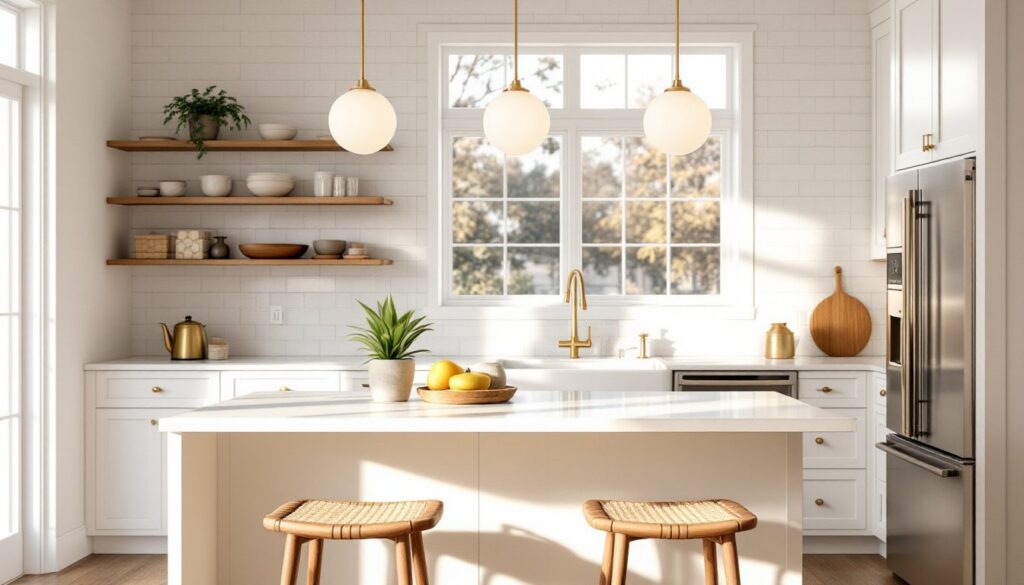
- Globe pendants: Opal or smoked glass spheres (typically 8–12 inches in diameter) that diffuse light evenly. Perfect for task lighting over counters.
- Cone or bell shades: Often metal with a white or colored enamel interior. These direct light downward, making them great for focused work zones.
- Sputnik chandeliers: Multi-arm fixtures with exposed bulbs radiating from a central hub. Best suited to larger kitchens or open-plan layouts where they become a focal point.
Installation notes: Standard ceiling height is 8 feet: hang pendants so the bottom sits 30–36 inches above the countertop or island surface. For an 8-foot ceiling, that usually means a pendant body no longer than 12–15 inches unless you’re working over a tall island. Always measure before ordering.
If your kitchen includes an island, kitchen island lighting should balance task needs with visual rhythm, odd numbers (one or three pendants) typically look more balanced than even groupings.
Wiring consideration: Most pendants use a standard junction box rated for up to 50 pounds. Heavier chandeliers may require a fan-rated box or additional bracing. Check your box before ordering a statement piece.
Flush Mount and Semi-Flush Ceiling Fixtures
Not every kitchen has the clearance for pendants. In galley kitchens, tight work triangles, or rooms with ceiling heights under 8 feet, flush and semi-flush mounts are the practical choice.
- Flush mounts: The canopy sits directly against the ceiling. Look for drum-style fixtures with wood veneer or perforated metal, or starburst designs with brass arms and opal glass.
- Semi-flush mounts: A short stem (usually 4–8 inches) drops the fixture slightly, adding visual interest without eating headroom. These often feature bowl-shaped glass or shallow cone shades.
Light output: A typical 10×12-foot kitchen needs roughly 5,000–7,500 lumens total for adequate ambient and task lighting. A single semi-flush with three 800-lumen bulbs (about 60-watt incandescent equivalent) delivers 2,400 lumens, fine for supplemental light, but plan for under-cabinet or additional fixtures if this is your only overhead source.
For kitchens with low ceilings, semi-flush fixtures offer the mid century look without the collision risk.
How to Choose the Right Mid Century Lighting for Your Kitchen Layout
Layout drives fixture selection. Start by identifying your kitchen’s footprint and workflow zones.
Galley kitchens: Narrow spaces benefit from a linear approach. Install two or three small pendants down the centerline, or use a single track light with mid century-style heads (adjustable brass or enamel cones). Avoid wide chandeliers that overwhelm the space. For more ideas, explore galley kitchen lighting strategies.
L-shaped and U-shaped kitchens: These layouts often include an island or peninsula. Use pendants over the island for task lighting, and a flush or semi-flush mount in the main work area. Coordinate finishes, if your pendants are aged brass, keep the ceiling fixture in the same family.
Open-plan kitchens: When the kitchen flows into a dining or living area, lighting helps define zones without walls. A statement Sputnik or cluster chandelier over the island creates a visual anchor, while recessed lighting handles the perimeter. Recessed lighting layout should follow a grid with fixtures spaced 4–6 feet apart to avoid dark pockets.
Scale matters: A 36-inch-wide island can handle one large pendant (14–18 inches in diameter) or two smaller ones (8–10 inches each). A 72-inch island typically looks best with three pendants spaced 24–30 inches apart on center. Measure your island, then sketch the pendant placement to scale before buying.
Color temperature: Mid century interiors lean warm. Choose bulbs in the 2700K–3000K range (soft white to warm white) to complement wood tones and brass finishes. Cooler temps (4000K+) can make retro fixtures feel clinical.
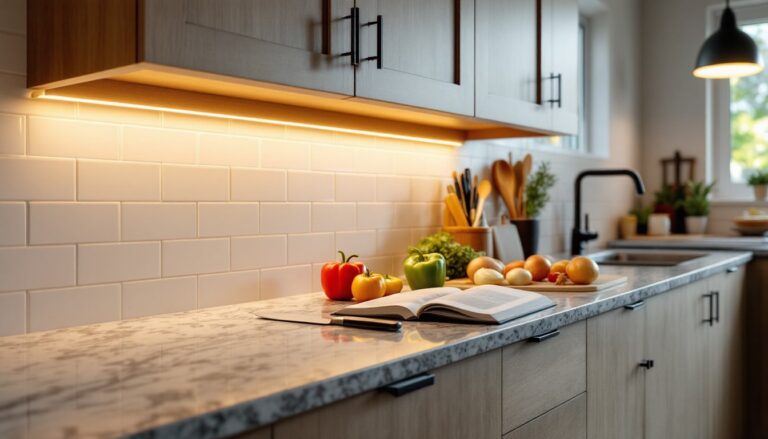
For compact spaces, small kitchen lighting often requires layering: a ceiling fixture for general light, under-cabinet strips for task work, and maybe one accent pendant over a breakfast bar.
Installing Mid Century Modern Kitchen Lighting: DIY Tips and Considerations
Swapping a light fixture is a manageable DIY project if you’re comfortable with basic electrical work. Always turn off power at the breaker and use a non-contact voltage tester to confirm wires are dead before touching anything.
Tools you’ll need:
- Screwdriver (flathead and Phillips)
- Wire strippers
- Needle-nose pliers
- Voltage tester
- Ladder or step stool
- Wire nuts (often included with new fixtures)
- Optional: drill and spade bit if installing a new junction box
Step-by-step for pendant installation:
- Remove the old fixture: Unscrew the canopy, disconnect wire nuts, and lower the old fixture. Note how wires are connected (usually black to black, white to white, bare copper to green or bare ground).
- Check the junction box: Confirm it’s securely fastened to a ceiling joist or cross brace. If the box wobbles, reinforce or replace it. Retrofit boxes (like fan-rated pancake boxes) can be installed without cutting drywall in many cases.
- Adjust pendant cord length: Many mid century pendants have adjustable cords. Shorten by looping excess inside the canopy, or use a cord grip if the fixture allows. Don’t cut unless you’re confident re-stripping and splicing.
- Connect wires: Match fixture wires to house wires using wire nuts, black (hot) to black, white (neutral) to white, ground to ground. Tuck neatly into the box.
- Mount the canopy: Secure with screws into the box’s threaded holes. Some fixtures use a crossbar or strap: follow the manufacturer’s instructions.
- Install bulbs and test: Restore power and flip the switch. If the fixture doesn’t light, recheck connections and ensure bulbs are seated.
When to call a pro: If your kitchen doesn’t have an existing ceiling box where you want a pendant, you’ll need to cut drywall, run new cable, and possibly tap into an existing circuit. This is straightforward for an electrician but tricky for a first-timer. Also, if you’re converting a recessed can to a pendant, use a recessed light converter kit, these screw into the can’s socket and provide a pendant mount. They’re code-compliant and take 10 minutes.
Permits and code: Replacing a fixture on an existing box typically doesn’t require a permit. Running new wiring or adding a circuit does in most jurisdictions. Your local building department and the NEC set the rules, check before starting. For instance, kitchens require GFCI protection on countertop outlets (not lighting circuits), but some inspectors want AFCI breakers on all kitchen circuits in new construction.
Dimmer compatibility: Many mid century reproductions use LED bulbs. Confirm your dimmer is LED-compatible (older dimmers designed for incandescent bulbs can cause flickering). Lutron and Leviton make reliable LED dimmers that install like standard switches.
Safety gear: Wear safety glasses when working overhead. If you’re drilling into a ceiling, a dust mask helps. And don’t skip the voltage tester, just because you flipped the breaker doesn’t mean the wire is dead (mis-labeled panels happen).
For focused task areas, consider pairing your mid century pendants with practical over-sink lighting to ensure every zone is well-lit.
Conclusion
Mid century modern kitchen lighting delivers timeless style that’s as functional today as it was 60 years ago. Focus on clean geometry, honest materials, and proportions that fit your layout. Whether you’re hanging a trio of globe pendants or swapping in a Sputnik semi-flush, measure twice and respect the electrical basics. The result? A kitchen that feels both vintage-inspired and entirely your own.