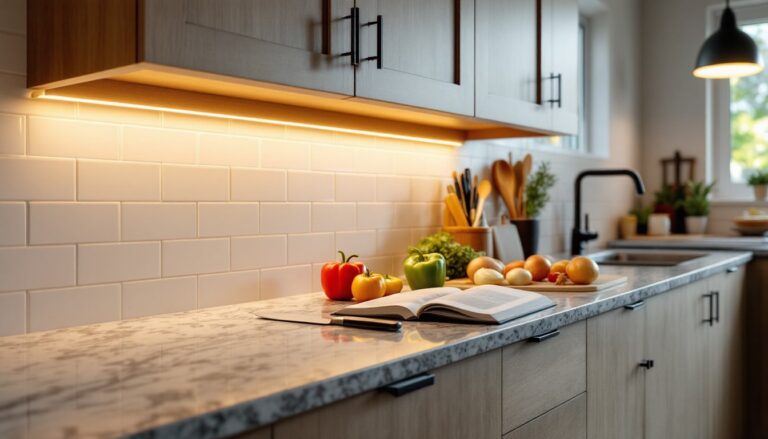
Dark counters make chopping onions a gamble and reading recipes a squint-fest. LED under cabinet lighting fixes both problems while transforming tired kitchens into well-lit workspaces. It’s one of the most practical upgrades a homeowner can tackle, and unlike a full remodel, you can knock it out in an afternoon. Whether you’re prepping a snack or prepping a house for sale, good task lighting under wall cabinets makes the space safer, more functional, and noticeably more polished. This guide walks through everything from picking the right fixture style to wiring it in without hiring an electrician.
Table of Contents
ToggleKey Takeaways
- LED under cabinet lighting eliminates countertop shadows and improves safety for food prep by directing light exactly where you work.
- Choose between puck lights, strip lights, or linear bars based on cabinet layout and budget; strip lights and linear bars provide superior coverage compared to puck lights.
- Plan fixture placement 2–4 inches from the cabinet front, measure counter footage carefully, and prep surfaces with rubbing alcohol before installation to ensure adhesive strips stick properly.
- Hardwired LED under cabinet fixtures provide a cleaner finish than plug-in models but require basic electrical skills or a licensed electrician and possible local permits.
- Match color temperature with existing kitchen lighting (warm white 2700K–3000K for traditional kitchens, cool white 4000K–5000K for modern spaces) to avoid a mismatched, unfinished appearance.
- Test fixtures temporarily with painter’s tape before permanent installation to confirm even brightness, eliminate glare, and verify coverage across the entire counter area.
What Is LED Under Cabinet Lighting and Why You Need It
LED under cabinet lighting mounts to the underside of wall cabinets to illuminate countertops below. Unlike overhead lights that cast shadows when someone’s standing at the counter, these fixtures direct light downward exactly where prep work happens.
The benefits go beyond visibility. LEDs use roughly 75% less energy than incandescent bulbs and last up to 25,000 hours before needing replacement. That’s years of daily use without touching a ladder. They also run cool, important when you’re mounting fixtures inches above a wooden cutting board or near outlets.
Most kitchens suffer from poor task lighting. A single ceiling fixture might brighten the room generally, but it leaves counters in shadow. Under cabinet LEDs solve that gap without requiring structural changes or new electrical boxes in most cases.
This upgrade also adds subtle ambiance. Soft lighting along the backsplash creates depth, making small kitchens feel larger. It’s why small kitchen designs often lean on layered lighting instead of one harsh overhead source.
From a safety standpoint, good counter lighting reduces knife accidents and makes spill cleanup easier to spot. If the kitchen sees heavy use, meal prep, assignments, late-night snacking, proper task lighting isn’t optional.
Types of LED Under Cabinet Lighting for Your Kitchen
Choosing the right LED format depends on cabinet layout, budget, and how much wiring you’re willing to do. Three main types dominate the market, each with trade-offs.
Puck Lights vs. Strip Lights vs. Linear Bars
Puck lights are small, disc-shaped fixtures spaced every 8–12 inches under cabinets. They’re affordable and easy to install, but they create distinct pools of light instead of uniform coverage. That works fine for accent lighting or short cabinet runs, but longer counters end up with bright spots and dark gaps. Battery-powered versions exist, though swapping batteries every few months gets old fast.
LED strip lights (also called tape lights) offer continuous, even illumination. These flexible ribbons stick to the cabinet bottom with adhesive backing and come in various brightness levels measured in lumens per foot. Strips are ideal for seamless coverage and fitting tight spaces, but cheaper models show individual LED dots reflected in glossy backsplashes. Look for high-density strips (120 LEDs per meter or more) with diffuser channels to avoid that dotted effect. Most strips require a low-voltage transformer (12V or 24V DC), which adds a step to installation.
Linear bars (also called light bars) split the difference. These rigid aluminum fixtures house LEDs in a single enclosed unit, providing uniform light without exposed diodes. They’re more expensive than strips but easier to install than running multiple pucks. Bars come in standard lengths, 12″, 18″, 24″, and so on, so measure cabinet runs carefully. Many connect end-to-end with linking cables, making multi-cabinet setups cleaner.
Color temperature matters. 2700K–3000K (warm white) mimics incandescent bulbs and suits traditional kitchens. 4000K–5000K (cool white or daylight) provides crisper task lighting and pairs well with modern spaces. Some fixtures offer tunable white or RGB color-changing modes, though those features rarely justify the extra cost for most DIYers.
Dimmability is worth considering. Not all LED fixtures dim smoothly, check that both the fixture and any wall dimmer switch are compatible. Low-quality combinations can flicker or hum.
How to Choose the Right LED Under Cabinet Lighting
Start by measuring the cabinet runs. Use a tape measure to record the linear footage of each section needing light. For galley or U-shaped layouts with multiple cabinet banks, measure each separately, galley kitchen lighting often requires fixtures on both sides.
Next, decide on power source. Plug-in models are the easiest install: mount the fixture, run a thin cord to an outlet, and you’re done. They work well when an outlet sits conveniently nearby, but visible cords look amateurish. Hardwired fixtures connect directly to household electrical via junction boxes, giving a cleaner finish but requiring basic electrical skills (and possibly a permit, check local codes). If you’re uncomfortable working with 120V AC, hire a licensed electrician. Battery-powered options avoid wiring entirely but demand regular battery swaps and offer lower brightness.
Brightness should match the task. For general task lighting, aim for 150–300 lumens per linear foot of counter. Brighter isn’t always better, overlighting a small space feels clinical. If the kitchen already has decent overhead lighting, the lower end of that range works fine. If under cabinet LEDs are the primary light source, push toward 300 lumens/ft.
Consider mounting location. Fixtures can mount to the cabinet bottom (most common), the cabinet front edge (hidden from view but may create glare), or inside a recessed channel routed into the cabinet bottom (cleanest look, requires woodworking). Front-edge mounting hides the fixture but can reflect harshly off polished stone counters, test placement before committing.
Control options range from simple on/off switches to motion sensors, timers, and smartphone apps. A basic wall switch or remote works for most kitchens. Motion sensors are handy for midnight snack runs but can trigger unexpectedly. Smart home integration (Zigbee, Z-Wave, Wi-Fi) adds convenience if the rest of the house is already connected, but it’s overkill for a standalone project.
Budget realistically. Quality plug-in LED bars run $25–$60 per fixture. Full hardwired kits with transformer and multiple fixtures range $100–$300 depending on length and features. According to experts reviewing under-cabinet lighting options, investing in mid-range fixtures pays off in longevity and light quality.
Step-by-Step Installation Guide for LED Under Cabinet Lights
Before starting, gather tools and materials. You’ll need a tape measure, pencil, drill with bits, screwdriver, wire strippers (for hardwired installs), wire nuts, and electrical tape. For plug-in models, add cable clips to secure cords. Safety gear includes safety glasses and work gloves. If working with household electrical, shut off power at the breaker and use a non-contact voltage tester to confirm wires are dead.
1. Plan the layout. Mark fixture locations with a pencil. Position lights toward the front edge of the cabinet bottom (about 2–4 inches back) to minimize shadows. For linear bars or strips, center them under each cabinet section. For pucks, space them evenly, no more than 12 inches apart to avoid dark gaps.
2. Prep the surface. Wipe cabinet bottoms with rubbing alcohol or a degreaser to remove dust and cooking residue. Adhesive-backed strips won’t stick to greasy surfaces. If cabinets have a rough texture, adhesive may fail, use mounting clips or screws instead.
3. Mount the fixtures. For adhesive strips, peel the backing and press firmly for 30 seconds. Let adhesive cure per manufacturer instructions (usually 24 hours) before powering on. For screw-mount bars, mark screw holes, pre-drill pilot holes to avoid splitting thin cabinet material, then fasten with provided screws. For plug-in models, route the cord along the cabinet edge or behind a microwave to hide it, securing with adhesive cable clips every 12 inches.
4. Connect power (hardwired). If installing hardwired fixtures, locate the nearest junction box or install a new one per local electrical code. Most under cabinet LEDs require low-voltage DC power, so you’ll wire a transformer (often called a driver) to the AC supply, then connect the transformer output to the fixtures. Match wire colors: black (hot) to black, white (neutral) to white, and bare copper (ground) to green or bare. Secure connections with wire nuts and wrap with electrical tape. Tuck wires neatly into the junction box and secure the cover.
5. Test before finishing. Restore power and turn on the lights. Check for even brightness, flickering, or dead spots. If using a dimmer, test the full range. Adjust fixture position if needed, sometimes a slight shift eliminates glare or shadows.
6. Add finishing touches. For exposed wires or adhesive edges, consider stick-on cable channels or trim molding. This is especially important for lighting fixtures visible from dining areas. Some installers route wires through the cabinet back into the wall cavity for a completely hidden look, but that requires cutting into cabinetry.
If the project involves installing new electrical boxes or running new circuits, most jurisdictions require a permit and inspection. Check with your local building department. Even if you’re comfortable with basic wiring, code compliance isn’t optional, improper electrical work is a fire and insurance liability.
Common Mistakes to Avoid When Installing Under Cabinet Lighting
Skipping surface prep is the top mistake with adhesive-mount fixtures. Strips that peel off weeks later usually weren’t applied to a clean, dry surface. Take an extra five minutes to degrease and dry thoroughly.
Using too few fixtures leaves dark patches. Measure carefully and don’t try to stretch coverage. A 24-inch light bar won’t adequately illuminate a 36-inch cabinet run. According to Tom’s Guide reviews, underpowered setups are a common frustration among DIYers.
Mixing incompatible dimmers and LEDs causes flickering or buzzing. Not all dimmers handle LED loads well. Use a dimmer rated for LED or low-voltage DC if your fixtures require it. Standard incandescent dimmers often fail with LEDs.
Mounting too far back defeats the purpose. If lights sit more than 4 inches from the cabinet front, they’ll light the backsplash more than the counter. Position fixtures closer to the front edge unless glare becomes an issue.
Ignoring color temperature mismatch creates a jarring look when under cabinet lights don’t match the room’s other bulbs. If recessed cans or pendants are warm white (2700K–3000K), match that tone under cabinets. Mixing cool white task lights with warm ambient lighting looks unfinished.
Overlooking heat buildup in enclosed spaces can shorten LED lifespan. While LEDs run cooler than incandescent bulbs, poor ventilation in a closed cabinet soffit still traps heat. Leave a small air gap or choose fixtures with heat sinks.
Running cords across visible areas is a telltale sign of rushed work. For plug-in models, plan the cord route before mounting. If no nearby outlet exists, adding one (inside a cabinet or behind the microwave) beats draping a cord down the wall. Many kitchen lighting setups benefit from adding a dedicated outlet during the project.
Not testing before permanent mounting locks you into a bad layout. Temporarily position fixtures with painter’s tape, power them on, and check for glare, shadows, and coverage before committing adhesive or screws. It’s easier to adjust now than after everything’s fastened.
Conclusion
Good under cabinet lighting turns a dim kitchen into a functional workspace without a major renovation. Whether choosing puck lights for a rental or hardwiring linear bars in a forever home, the upgrade is straightforward enough for most DIYers, just measure carefully, prep surfaces properly, and don’t cut corners on power connections. The result is better visibility, safer food prep, and a kitchen that finally looks as good at night as it does in daylight.