Finding the right outdoor lighting professional can transform your property from forgettable to stunning after sunset, and improve safety and security while you’re at it. But searching “outdoor lighting services near me” returns dozens of options, and not all are created equal. Some specialize in dramatic landscape illumination, others focus on security systems, and a few try to do everything with mixed results. This guide walks through what professional outdoor lighting actually involves, how to separate the pros from the pretenders, and what you should expect to pay for quality work that lasts.
Table of Contents
ToggleKey Takeaways
- Professional outdoor lighting services near me should specialize in either landscape design, security systems, or both—verifying expertise helps ensure the right fit for your project goals.
- Quality outdoor lighting involves low-voltage wiring (12V or 24V systems) with proper cable burial, transformers, and LED fixtures designed to withstand weather and meet NEC codes.
- Homes with professional landscape lighting often see 5–10% higher perceived value at resale, while well-lit exteriors measurably deter break-ins by eliminating hiding spots around entry points.
- Request itemized quotes comparing fixture quality (brass vs. plastic), cable gauge, warranty coverage (typically 1–2 years labor, 5–10 years fixtures), and proof of licensing and liability insurance before hiring.
- Budget $1,500–$12,000+ for landscape lighting projects and $800–$2,500 for security lighting, depending on fixture count, controls, and site conditions—typical timelines run 1–3 weeks for design and permits plus 1–3 days for installation.
- Always ask your outdoor lighting installer about permit requirements, utility marking (call 811 before digging), cable burial depth, transformer location, and post-install fine-tuning to ensure safe, code-compliant results.
Why Professional Outdoor Lighting Matters for Your Home
DIY solar stakes from the big-box store have their place, but professional outdoor lighting is a different animal entirely. It involves low-voltage wiring (typically 12V or 24V systems), transformers sized to the load, proper burial depth for cable (usually 6 inches minimum per NEC guidelines, though always check local codes), and fixtures designed to withstand years of weather exposure.
A professional installer understands how to layer lighting: path lights for navigation, uplighting for architectural features, downlighting from trees or eaves for ambient fill, and accent lights for focal points like water features or specimen plants. They’ll also calculate voltage drop over cable runs, ensuring fixtures at the end of a circuit shine as brightly as those near the transformer.
Beyond aesthetics, properly installed outdoor lighting adds measurable value. Homes with quality landscape lighting often see 5-10% higher perceived value during showings, according to real estate data. More importantly, well-lit exteriors deter break-ins, most burglars avoid properties with clear illumination around entry points.
There’s also the code and safety angle. If you’re adding 120V line-voltage fixtures (like certain security floods), you’re working with household current. That requires GFCI protection, weatherproof boxes, and often a permit. A licensed electrician knows these requirements: a handyman might not. Low-voltage systems are more forgiving, but burying cable without proper conduit or depth invites nicked wires and expensive troubleshooting later.
Types of Outdoor Lighting Services Available
Outdoor lighting isn’t one-size-fits-all. Most providers specialize in one or two categories, so knowing what you need helps narrow your search.
Landscape and Garden Lighting
This is the aesthetic side: making your yard look intentional after dark. Landscape lighting pros use a mix of LED fixtures (the industry standard now, 25,000–50,000 hour lifespans and low energy draw), transformers with photocell or timer controls, and burial-rated cable.
Typical fixtures include:
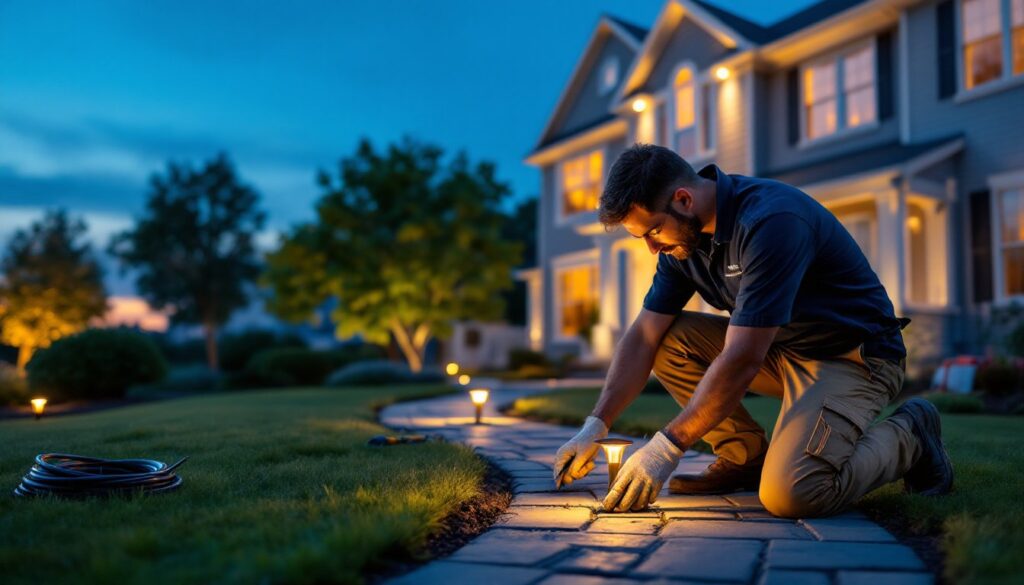
- Path lights: Low-profile units that mark walkways without glare.
- Well lights: Recessed into the ground to uplight trees, columns, or facade details.
- Wash lights: Wider beam angles for even coverage across walls or hedges.
- Spotlights: Narrow beams for dramatic accents on sculptures, signage, or architectural features.
A good landscape lighting installer will do a site visit at dusk to see existing light pollution, shadows, and sightlines. They’ll propose a lighting plan with fixture locations, wattages, and beam angles. Expect them to use brass, copper, or powder-coated aluminum fixtures, plastic housings degrade fast outdoors.
Some installers also handle specialty work like underwater pond lights, deck and step lighting integrated into hardscaping, or color-changing RGB systems controlled via smartphone. If you want effects beyond “on” and “off,” confirm the provider has experience with smart controllers and compatible fixtures, especially if you’re already invested in a home electronics installation ecosystem.
Security and Motion-Sensor Lighting
Security lighting prioritizes function: bright, reliable illumination triggered by motion or timers. This usually means 120V line-voltage fixtures like LED flood lights, wall packs, or dusk-to-dawn fixtures.
Key differences from landscape lighting:
- Higher lumens: Security floods often output 1,000–3,000 lumens per head, compared to 200–400 for landscape accents.
- Wider coverage: Fixtures use flood reflectors (120° or wider) to eliminate hiding spots.
- Motion sensors: Passive infrared (PIR) sensors detect movement within 20–70 feet, depending on model and mounting height.
- Line voltage: These run on household 120V, requiring proper electrical boxes, GFCI breakers, and often a permit.
For security work, you want a licensed electrician, not just a lighting installer. They’ll ensure circuits are properly protected, boxes are rated for wet locations, and switches or timers are accessible. Some homeowners integrate security lighting with broader automation systems, which pairs well with home network installation to support smart controls and camera integration.
Don’t overlook battery-backup fixtures if you’re in an area with frequent outages. A few strategically placed emergency lights can keep entrances visible even when the grid goes down.
How to Find the Best Local Outdoor Lighting Professionals
Start with referrals from neighbors or local landscape contractors, they’re often the best lead. If you’re starting cold, platforms like Angi and HomeAdvisor aggregate reviews and match you with prescreened pros based on your ZIP code. Filter by specialty (landscape lighting vs. security) and read recent reviews, not just star ratings. Look for mentions of punctuality, cleanup, and whether the installer returned for tweaks after the initial install.
Check credentials:
- Licensing: If the work involves line voltage, the installer should hold a state electrician’s license (journeyman or master, depending on scope). Low-voltage landscape lighting often doesn’t require a license, but some municipalities do, verify local rules.
- Insurance: Ask for proof of general liability and workers’ comp. You don’t want to be liable if someone gets hurt on your property.
- Certifications: Some installers hold credentials from organizations like the Association of Outdoor Lighting Professionals (AOLP). It’s not mandatory, but it signals they’ve invested in training.
Request a portfolio. Reputable pros will have photos of completed projects, ideally with before-and-after shots taken at dusk. If they can’t show you past work, that’s a red flag.
Get at least three written quotes. Each should itemize fixtures, transformers, cable footage, labor, and any permits. Beware of quotes that lump everything into “materials and labor”, that’s a recipe for surprise charges later. Compare apples to apples: a $1,200 quote using plastic fixtures and 18-gauge cable isn’t the same as a $2,000 quote with brass fixtures and 12-gauge wire.
Ask about warranties. Quality installers typically offer 1–2 years on labor and pass through manufacturer warranties on fixtures (often 5–10 years for LEDs). If someone won’t stand behind their work, keep looking.
What to Expect: Cost and Timeline for Outdoor Lighting Projects
Cost varies widely based on scope, fixture quality, and regional labor rates. Here are rough ballparks as of 2026:
- Basic landscape lighting package (6–8 path lights, transformer, cable): $1,500–$3,000 installed.
- Mid-range system (12–15 fixtures, mix of path/accent/uplights, 300W transformer): $3,000–$6,000.
- High-end design (20+ fixtures, smart controls, premium brass fixtures): $6,000–$12,000+.
- Security lighting (2–4 motion-sensor floods, line-voltage install, permit): $800–$2,500.
These figures assume average labor rates of $75–$125/hour for licensed electricians and $50–$85/hour for landscape lighting specialists. Costs spike if trenching is difficult (rocky soil, established landscaping), if you need panel upgrades to support new circuits, or if your site requires extensive conduit runs. According to ImproveNet, homeowners should budget an additional 10–20% for unforeseen site conditions.
Timeline for a typical residential project:
- Consultation and design: 1–2 weeks (includes site visit, proposal, revisions).
- Permitting (if required): 1–3 weeks, depending on your municipality.
- Installation: 1–3 days for most landscape lighting projects: security lighting can often be done in a single day.
- Fine-tuning: Good installers return at dusk a few days post-install to adjust aim and brightness.
Weather and ground conditions can delay outdoor work. Frozen ground or heavy rain makes trenching miserable and risks damaging your yard. Spring and fall are peak seasons, so book early or expect longer lead times.
Questions to Ask Before Hiring an Outdoor Lighting Service
Before signing a contract, nail down these details:
Licensing and insurance:
- “Are you licensed for electrical work in this state?” (if line voltage is involved)
- “Can you provide a certificate of insurance?”
Experience and specialization:
- “How many outdoor lighting projects have you completed in the past year?”
- “Do you specialize in landscape lighting, security lighting, or both?”
- “Can I see photos of similar projects?”
Project specifics:
- “What brand and type of fixtures are you proposing, and why?”
- “What gauge cable will you use, and how deep will it be buried?”
- “Will you use direct burial cable or conduit?” (Conduit is more expensive but offers better protection.)
- “What size transformer, and where will it be located?”
- “Do I need a permit, and will you handle that?”
Warranty and service:
- “What warranty do you offer on labor?”
- “What’s covered under the fixture manufacturer’s warranty, and how do I make a claim?”
- “Do you offer maintenance or bulb replacement services?”
Timeline and payment:
- “How long from contract signing to project completion?”
- “What’s your payment schedule?” (Avoid anyone demanding full payment upfront, typical is a deposit, progress payment, and final payment upon completion.)
- “What happens if weather delays the project?”
Safety and cleanup:
- “How will you protect existing landscaping during trenching?”
- “Will you mark underground utilities before digging?” (This is legally required in most areas, call 811 before any excavation.)
- “Who’s responsible for cleanup and sod repair?”
If the installer seems annoyed by questions, that’s your cue to move on. Pros expect informed clients and welcome the chance to explain their process.
Professional outdoor lighting isn’t a DIY Saturday project unless you’ve got electrical chops and the right tools. But hiring the right pro, someone who understands voltage drop, code requirements, and the difference between a wash and a spot, pays off in a system that looks sharp, works reliably, and adds real value to your home. Take the time to vet candidates, compare detailed quotes, and ask the hard questions upfront. Your yard (and your evening curb appeal) will thank you.