In the world of kitchen design, lighting fixtures often take a backseat to trendy appliances and sleek countertops. But let’s face it—without the right lighting, even the fanciest kitchen can feel like a dim cave where culinary dreams go to die. Imagine trying to whip up a gourmet meal while squinting in the shadows. Not exactly the MasterChef experience everyone hopes for!
Table of Contents
ToggleOverview of Kitchen Lighting Fixtures
Kitchen lighting fixtures play a crucial role in both functionality and ambiance. Focus on the three primary types: ambient, task, and accent lighting. Ambient lighting provides general illumination, ensuring every corner of the kitchen is well-lit. Task lighting focuses on specific work areas like countertops and stoves, making cooking and preparation easier. Accent lighting highlights architectural features or decorative elements, adding depth to the overall design.
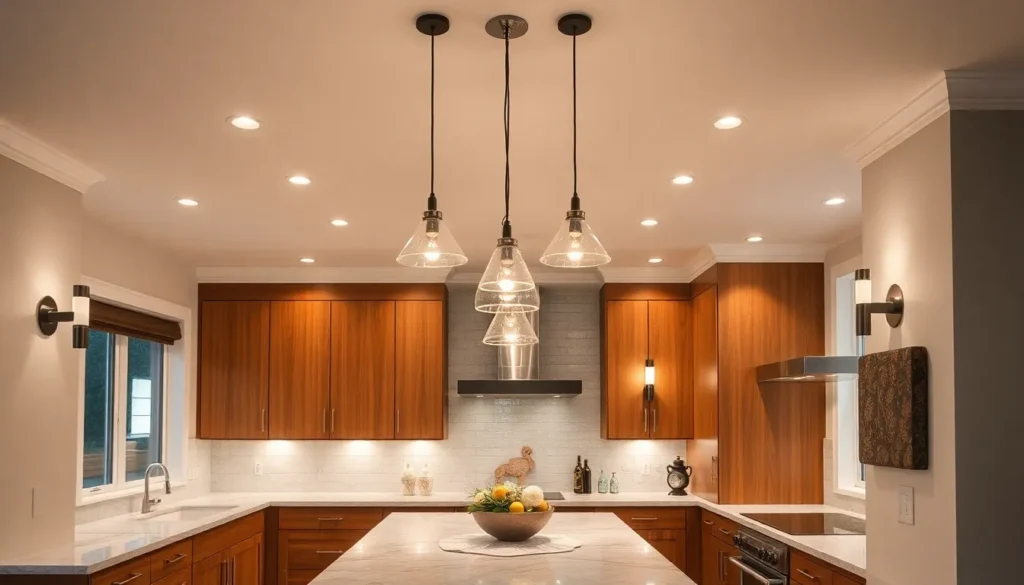
Consider various fixture styles that harmonize with kitchen aesthetics. Pendant lights hang gracefully over islands or dining areas, establishing a focal point. Recessed lights, installed in the ceiling, create a sleek and modern look while offering unobtrusive illumination. Wall sconces can add charm and are ideal for illuminating darker areas without taking up counter space.
Select energy-efficient options like LED bulbs, which last longer and reduce electricity costs. They emit less heat, contributing to a cooler kitchen environment, especially during cooking hours. Dimming capabilities can enhance versatility, allowing adjustment of brightness levels based on different tasks or moods.
Evaluate the size and height of fixtures to ensure they fit proportionately within the kitchen space. Large fixtures can overpower smaller kitchens, while inadequate lighting diminishes larger areas. It is advisable to map out lighting needs based on the kitchen layout. Properly layered lighting enhances both functionality and style, creating an inviting atmosphere for culinary activities.
Explore a mix of fixture types for a balanced approach that meets aesthetic and practical needs. The right combination contributes to an efficient, inviting cooking environment where creativity and enjoyment can thrive.
Types of Lighting Fixtures for Kitchen
Lighting fixtures play a vital role in kitchen functionality and aesthetics. Different types of lighting cater to specific needs, enhancing both the cooking experience and the overall ambiance.
Ambient Lighting
Ambient lighting shines a general light across the kitchen, ensuring all areas receive adequate illumination. Common fixtures providing ambient light include ceiling-mounted lights and chandeliers. Soft, diffuse lighting creates a cozy atmosphere while allowing safe navigation. This layer sets the foundation for other lighting types, enhancing the kitchen’s overall visibility and inviting feel.
Task Lighting
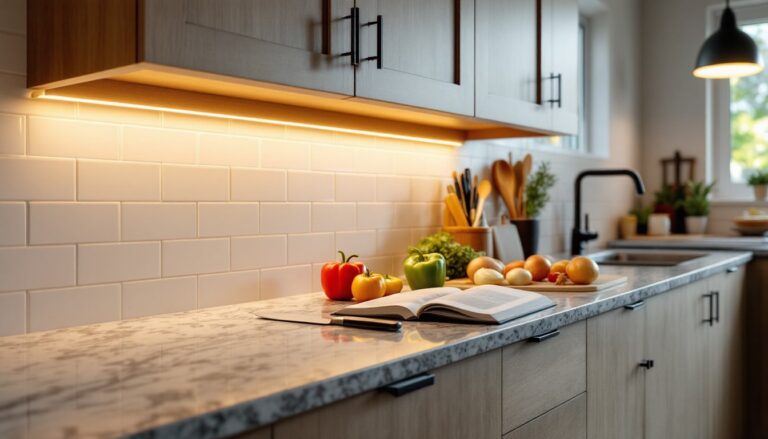
Task lighting targets specific work areas, making it easier to perform cooking and preparation activities. Under-cabinet lights are a popular choice, illuminating countertops directly. Pendant lights positioned over islands also serve this purpose, offering focused brightness for meal prep. Proper placement of task lighting diminishes shadows, ensuring safety and efficiency when using sharp tools and hot surfaces.
Accent Lighting
Accent lighting highlights special features within the kitchen, adding visual interest. This lighting type often includes wall sconces or LED strip lights that draw attention to artwork and architectural elements. The use of accent lighting enhances the kitchen’s character, creating depth and making the space feel more dynamic. Well-placed accents can transform ordinary areas into focal points, elevating the design while maintaining practicality.
Popular Materials and Styles
Various materials and styles enhance the function and appeal of kitchen lighting fixtures. Selecting the right combinations results in a well-lit, inviting cooking space.
Modern Fixtures
Modern fixtures often feature sleek lines, minimalistic designs, and innovative materials. Stainless steel and brushed nickel commonly dominate these fixtures, adding a contemporary edge. Glass shades can provide a fresh look, while geometric shapes add visual interest. LED technology integrates seamlessly into modern lighting, offering energy efficiency and long-lasting performance. Pendant lights often suspend over kitchen islands, creating a focal point. Recessed lighting aligns with clean design aesthetics, ensuring unobtrusive illumination. This style complements open-concept kitchens by providing ambient light without overwhelming the space.
Traditional Fixtures
Traditional fixtures emphasize classic designs, often incorporating ornate details and timeless materials. Bronze and wrought iron are popular choices, conveying a sense of warmth and elegance. Chandeliers with crystal embellishments can serve as stunning centerpieces, inviting charm into the kitchen. Wall sconces frequently flank features like cabinets, imparting a cozy glow. Vintage-style pendant lights may evoke nostalgia while providing task lighting above work areas. Fabric shades can soften the light and enhance the inviting atmosphere. Using traditional fixtures can create a harmonious blend with rustic or farmhouse kitchen themes.
Tips for Choosing the Right Lighting Fixtures
Select the right lighting fixtures to enhance the kitchen’s functionality and atmosphere. Consider the purpose of the space; ambient lighting creates overall illumination while task lighting focuses on specific areas. Fixture placement impacts visibility. Ensure that pendant lights hang at a height that offers both style and practicality over islands.
Evaluate the kitchen’s size when choosing fixtures. Larger kitchens benefit from multiple sources of light, while smaller spaces may require fewer fixtures to prevent overwhelming the area. Aim for a mix of ambient, task, and accent lighting to achieve a well-balanced effect.
Choose energy-efficient options like LED bulbs to reduce costs and minimize environmental impact. Modern LEDs offer various light temperatures, allowing customization of the kitchen’s mood. Seek fixtures that match the kitchen’s style, whether opting for contemporary sleek designs or classic ornate pieces.
Measure the kitchen space to maintain proportionate fixture sizes. Oversized chandeliers may dominate small kitchens, while tiny fixtures can get lost in vast areas. Layering different light sources ensures the kitchen feels warm and inviting, promoting comfort during culinary activities.
Explore dimming capabilities to add versatility to lighting setups. Adjustable brightness levels allow for quick transitions from bright task lighting to soft ambient lighting for entertaining guests. Highlight architectural features using accent lighting to add depth and interest to the kitchen’s design.
Finally, prioritize personal preferences and aesthetic coherence. Fixtures should reflect individual tastes while complementing the overall kitchen décor. Thoughtful selections create a cohesive, inviting environment that enhances both cooking and dining experiences.
Installation Considerations
When installing lighting fixtures in the kitchen, several factors require attention. Firstly, consider the layout of the kitchen and the specific areas needing illumination. Ambient, task, and accent lighting should be strategically distributed to maximize functionality and aesthetic appeal.
Fixture height plays a crucial role in effectively achieving desired lighting levels. Pendant lights above an island, for instance, should hang approximately 30 to 36 inches above the countertop. This height ensures adequate illumination while preventing glare. Similarly, under-cabinet lights should be installed directly along the lower edge of cabinets to enhance task areas without creating shadows.
Wiring presents another important consideration during installation. Ensuring proper electrical capacity to support the chosen fixture types is necessary. This capacity includes checking the existing outlets and circuits. For fixtures requiring hardwiring, hiring a licensed electrician offers safety and compliance with local codes.
Placement directly impacts both light distribution and overall ambiance. Pendant lights should complement kitchen zones, while recessed lights can uniformly illuminate larger spaces. Accent lighting highlights specific features, enhancing visual interest without overwhelming the overall design.
Choosing energy-efficient fixtures helps minimize long-term operational costs. Selecting LED bulbs in fixtures enhances longevity while providing energy savings. Fixtures with dimming capabilities add versatility, allowing users to adjust light levels based on mood or activity, making them ideal for various kitchen scenarios.
Lastly, consider the style and finish of each fixture. Coordinating styles ensures a cohesive aesthetic in the kitchen. Opting for contemporary or traditional designs can significantly impact the atmosphere, so selecting fixtures that resonate with overall kitchen decor remains essential.
Choosing the right lighting fixtures for a kitchen is essential for both functionality and aesthetics. The right combination of ambient, task, and accent lighting can transform a kitchen into a welcoming and efficient space. By considering factors such as fixture styles, energy efficiency, and proper placement, individuals can create a well-lit environment that enhances their culinary experiences.
A thoughtfully designed lighting plan not only improves visibility but also adds character to the kitchen. Whether opting for modern or traditional fixtures, personal preferences play a crucial role in achieving a cohesive look. Ultimately, investing time in selecting the right lighting can lead to a more enjoyable cooking and dining atmosphere.