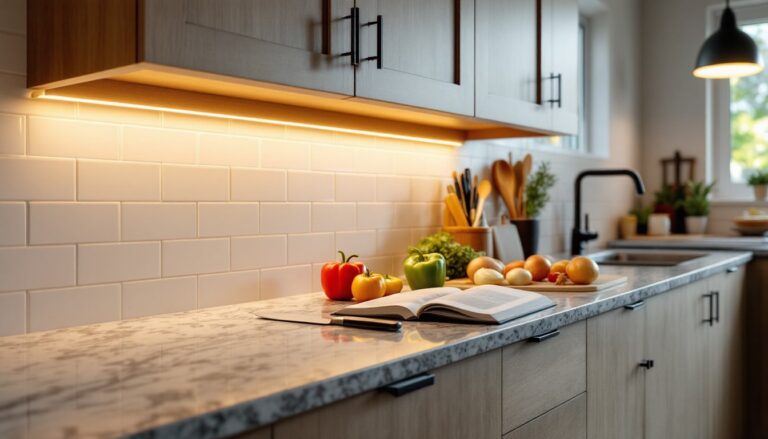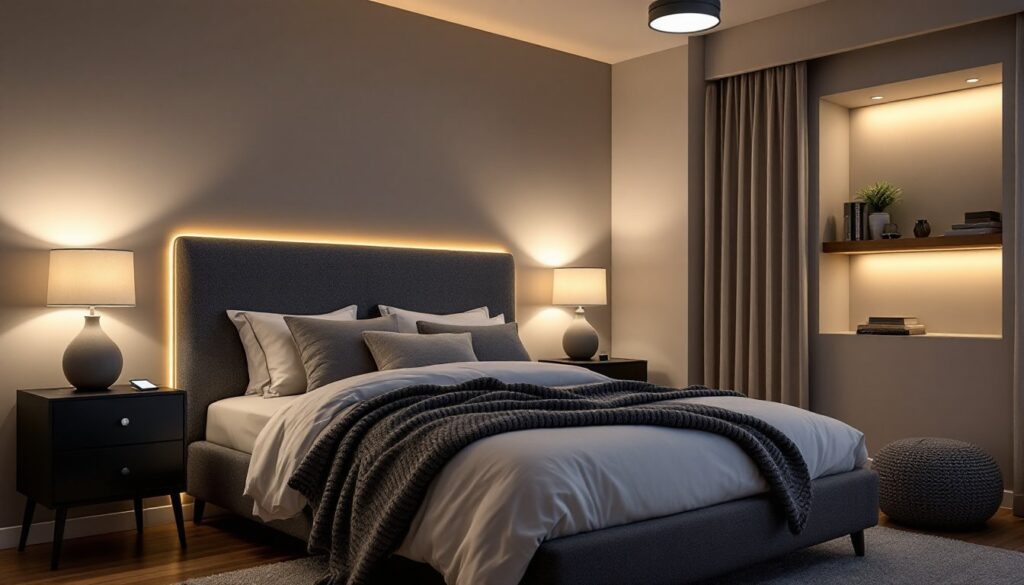
Good bedroom lighting isn’t just about flipping a switch. It’s the difference between a sterile hotel room and a space that actually feels like yours, one that shifts from morning alarm chaos to late-night calm without blinding you or leaving you squinting at your phone. Mood lighting lets you control not just brightness, but the entire atmosphere of the room. Whether you’re winding down after a long day, reading in bed, or just trying to make your bedroom look less like a poorly lit interrogation room, layering different light sources with the right color temperature gives you flexibility that a single overhead fixture never could.
Table of Contents
ToggleKey Takeaways
- Bedroom mood lighting transforms your space from sterile to personal by layering ambient, task, and accent lighting that can be controlled independently for maximum flexibility.
- Color temperature is critical—use warm 2700K–3000K bulbs in the evening to trigger melatonin production and support sleep, and reserve cool 5000K–6500K light for daytime tasks or closet areas.
- Smart bulbs and dimmable LED options give you app-controlled brightness and color adjustments without rewiring, while adhesive LED strip lights behind headboards and under beds add visual depth with minimal installation.
- Avoid mixing color temperatures in the same field of view, and always turn off power at the breaker and use a voltage tester before installing any wired fixtures to prevent fire hazards and breaker trips.
- Layered bedroom mood lighting solves practical problems—task lighting near your closet eliminates early-morning glare, sconces flanking the bed free up nightstand space, and dimmable controls let you shift from alert mornings to relaxed evenings.
Why Mood Lighting Matters in Your Bedroom
Your bedroom serves multiple functions: it’s where you sleep, get dressed, unwind, and sometimes work or read. A single overhead fixture can’t handle all those tasks without compromise. Mood lighting addresses this by giving you control over intensity and tone, which directly affects your circadian rhythm and overall comfort.
Bright, cool-toned light signals your brain that it’s time to be alert. Dim, warm-toned light does the opposite, triggering melatonin production that helps you fall asleep. This isn’t just interior design preference, it’s biology. If your bedroom lighting doesn’t let you shift between these modes, you’re either fighting to stay awake in the morning or staring at a harsh bulb when you’re trying to relax.
Layered lighting also solves practical problems. Task lighting near the closet or vanity means you don’t need to blast the whole room with light at 6 AM. Accent lighting highlights architectural features or artwork without adding glare. And when everything’s dimmable or switchable, you’re not stuck with one setting that works for nothing.
Types of Mood Lighting for Bedrooms
Dimmable Overhead Lights and Smart Bulbs
Start with your primary light source. If you’ve got a standard ceiling fixture, swap the bulb for a dimmable LED that works with your existing dimmer switch, or install a dimmer if you don’t have one. Standard toggle dimmers run about $15–$25 and require basic electrical work: shut off power at the breaker, remove the old switch, connect the hot and neutral wires to the dimmer, then test. If you’re not comfortable working with live wiring, hire an electrician. This is low-voltage work, but mistakes can trip breakers or create fire hazards.
Smart bulbs take it further. Brands like Philips Hue, LIFX, and Wyze let you control brightness and color temperature from your phone or voice assistant. Many of the best smart lights offer preset scenes (“relax,” “energize,” “reading”) and scheduling, so your lights dim automatically at bedtime. Installation is dead simple: screw in the bulb, connect it to your home Wi-Fi, and control it via app. No wiring, no tools, no permit.
One caveat: if you pair a smart bulb with a physical dimmer switch, you’ll likely get flickering or connectivity issues. Choose one control method and stick with it. Smart bulbs work best with standard on/off switches left in the “on” position, controlled entirely through the app.
LED Strip Lights and Accent Lighting
LED strip lights are the workhorse of bedroom mood lighting. They’re adhesive-backed, low-voltage (typically 12V or 24V), and come in lengths from 3 feet to 30+ feet. You’ll find them behind headboards, under bed frames, along crown molding, or inside closets. Most kits include the strip, a power supply, and a controller (remote, app, or both).
Installation is straightforward:
- Clean the surface with isopropyl alcohol to ensure the adhesive sticks.
- Peel and press the strip into place, avoiding sharp bends that can damage the circuitry.
- Connect the strip to the power supply and controller.
- Plug it in and test before securing everything permanently.
For hidden installations, like bedroom sleeping arrangements with platform beds, route the power cable through existing gaps or drill a small hole to keep cords out of sight. Use cable clips or raceways if the cord runs along a baseboard.
Strip lights draw minimal power (a 16-foot strip typically uses 20–40 watts), so you can plug multiple runs into the same outlet via a power strip. Just check the total wattage on your circuit, most bedrooms are on 15-amp circuits (1,800 watts max), so lighting alone won’t overload it.
Accent lighting, think table lamps, wall sconces, or picture lights, adds depth without flooding the room. Sconces flanking a bed eliminate the need for nightstand lamps and free up surface space. Wall-mounted fixtures require an electrical box, so if you’re adding new sconces where none existed, you’ll need to either fish wire through the wall (advanced DIY) or hire an electrician. Battery-powered or plug-in sconces with fabric cords are easier alternatives that still look intentional.
Table lamps with three-way bulbs give you built-in dimming without added hardware. Pair them with warm-white LED bulbs (2700K–3000K) for that classic bedside reading light that doesn’t feel clinical.
How to Layer Your Bedroom Lighting
Layering means combining ambient (general overhead), task (focused for reading, dressing, etc.), and accent (decorative or architectural) lighting in one space. The goal is flexibility: you should be able to light the whole room, light just one zone, or create a low-glow atmosphere depending on what you’re doing.
Start with ambient. A dimmable ceiling fixture or recessed cans provide the baseline. In bedrooms with 8-foot ceilings, a single centered fixture works. For larger rooms (12×14 feet or bigger), consider two fixtures or a ceiling fan with an integrated light kit. If you’re installing recessed lighting, space them roughly 4 feet apart and 2 feet from walls to avoid dark corners. That usually requires fishing wire through the ceiling and cutting holes for the cans, doable in a single-story home with attic access, but trickier if you’re working below a second floor.
Next, add task lighting where you actually need it. Nightstand lamps, reading sconces, or even clip-on book lights keep focused brightness off the rest of the room. If your partner’s a light sleeper, directional task lights let you read or get dressed without waking them.
Finally, layer in accent lighting for visual interest. Many bedroom essentials guides overlook lighting, but strip lights behind a headboard or under floating nightstands add dimension that makes the space feel intentional. String lights are popular but can look juvenile, if you use them, opt for warm-white bulbs with a dimmer, and keep the wiring tidy with cable clips.
Control each layer independently. That means separate switches (or smart controls) for your overhead, lamps, and accent lights. If you’re remodeling and running new circuits anyway, consider installing a multi-gang switch box near the door with separate dimmers for each zone. For existing setups, smart plugs let you control lamps and accent lights via app without rewiring.
Choosing the Right Color Temperature
Color temperature is measured in Kelvin (K) and determines whether light looks warm (yellowish) or cool (bluish). For bedrooms, the sweet spot is typically 2700K–3000K for evening use, that’s the warm, incandescent-like glow that signals relaxation. Daylight bulbs (5000K–6500K) are fine for closets or vanity areas where you’re picking out clothes or applying makeup, but they’ll keep you wired if used as primary bedroom lighting at night.
Smart bulbs and tunable LED strips let you shift color temperature on the fly, which is ideal if your bedroom doubles as a home office or reading nook. Set it to 4000K–5000K during the day for focus, then drop it to 2700K in the evening. Some systems, like Philips Hue, offer “circadian rhythm” modes that adjust automatically based on time of day, as discussed in many lighting ideas tailored for residential spaces.
If you’re sticking with standard bulbs, buy a few at different temperatures and test them in your space. Paint color, furniture, and even bedding affect how light reads in a room. A warm bulb in a north-facing bedroom with cool gray walls might still feel stark. A bulb that looks perfect in the store can look sickly yellow against white trim.
Avoid mixing color temperatures in the same field of view, warm overhead and cool task lighting look unintentional and visually chaotic. Match your bulbs within a single space, or keep different temperatures on separate layers that you don’t use simultaneously.
DIY Installation Tips for Mood Lighting
Most mood lighting installs are renter-friendly or low-impact. Plug-in lamps, adhesive LED strips, and smart bulbs require zero permanent changes. But if you’re replacing fixtures, adding dimmers, or running new circuits, here’s what to know.
Safety first. Always shut off power at the breaker before touching any wiring. Use a non-contact voltage tester to confirm the circuit is dead, they’re $10–$15 and non-negotiable. Wear safety glasses if you’re drilling into ceilings or walls: dust and debris fall straight into your eyes otherwise.
For ceiling fixture replacement: Turn off the breaker. Remove the old fixture by unscrewing the mounting plate and disconnecting wire nuts. Match the wires: black (hot) to black, white (neutral) to white, and bare copper (ground) to the green screw or bare wire on the new fixture. Secure the mounting bracket, attach the fixture, restore power, and test. If your ceiling box is loose or damaged, replace it before hanging a heavy fixture, especially chandeliers or fan-light combos.
For dimmer installation: Same drill: kill power, remove the old switch, connect the dimmer’s wires per the included diagram. Most dimmers have two black wires (interchangeable with the circuit’s hot wires) and a green ground. Some LED bulbs aren’t compatible with older dimmer models and will flicker or hum. Check the bulb packaging for “dimmable” and pair it with an LED-rated dimmer.
For LED strip lights: Measure twice, cut once. Many strips have designated cut points (usually marked with scissor icons). Cutting elsewhere severs the circuit. If you need to route a strip around a corner, use corner connectors or solder extensions, don’t fold or bend sharply. Mount the power supply where it’s ventilated but hidden (under the bed, behind furniture, or inside a nightstand). If you’re mounting strips along bedroom paint colors with textured walls, clean the surface thoroughly or use mounting clips instead of adhesive.
For recessed lighting or new circuits: This crosses into electrical work that may require a permit, depending on jurisdiction. The National Electrical Code (NEC) requires that all wiring be enclosed in approved boxes, and some local codes mandate inspection for new circuits. If you’re comfortable pulling wire, installing boxes, and connecting to your panel, go for it, but if you’ve never opened your breaker panel, hire a licensed electrician. The cost varies widely ($100–$300 per fixture in most markets), but it’s cheaper than repairing fire damage.
Tool notes: A drill/driver, wire strippers, needle-nose pliers, and a voltage tester cover most lighting projects. For recessed can installs, you’ll also need a drywall saw, fish tape, and possibly a stud finder. A folding ladder beats a step stool every time when working overhead, stability matters when you’re holding a fixture and connecting wires.
Test everything before you finish. Better to discover a loose connection or a flickering bulb when the ladder’s still out than after you’ve cleaned up.