Landscape lighting transforms a dark yard into a safe, usable space after sunset, and it boosts curb appeal and security. But before homeowners start shopping for fixtures, they need a realistic picture of what the project will cost. Installation prices vary widely depending on the type of lighting, the size of the property, and whether the system runs on low-voltage or line-voltage power. This guide breaks down the 2026 costs for landscape lighting installation, explains what drives the price up or down, and helps homeowners decide whether to tackle it themselves or hire a pro.
Table of Contents
ToggleKey Takeaways
- The cost to install landscape lighting typically ranges from $2,000 to $5,000 for a complete professional system, with an average of $3,200 in 2026.
- Low-voltage LED path lights cost $75–$150 per fixture installed, while spotlights and well lights range from $100–$300, making them more affordable than line-voltage alternatives.
- DIY landscape lighting installation can save 40–60% on labor costs, though you must carefully plan wire gauge and transformer capacity to avoid voltage drop issues.
- Property size, wiring complexity, and system type significantly affect pricing—larger lots require more cable and labor, while line-voltage systems cost $500–$1,500 more than low-voltage due to conduit and electrical permits.
- LED fixtures cost more upfront but use 75% less power and last 15–25 years, offsetting the premium through energy savings over five years.
- A phased installation approach, purchasing quality components separately, and skipping unnecessary trenching are practical ways to reduce landscape lighting costs without compromising safety or performance.
Average Cost of Landscape Lighting Installation
In 2026, most homeowners spend between $2,000 and $5,000 for a complete landscape lighting system, with a national average around $3,200. That typically covers 8 to 12 low-voltage LED fixtures, a transformer, wiring, and professional installation.
Basic systems with 4 to 6 path lights or spotlights can run as low as $500 to $1,200 if a homeowner does the install. On the high end, properties with extensive landscaping, architectural features, and premium fixtures can hit $8,000 to $12,000 or more.
Per-fixture costs generally range from $100 to $300 installed for standard low-voltage lights. That includes the fixture, burial cable, connectors, and labor. Line-voltage (120V) fixtures cost more, often $200 to $500 per light, because they require conduit, GFCI outlets, and sometimes a licensed electrician to meet local code.
Keep in mind that these figures reflect mid-grade materials and standard installation. High-end brass or copper fixtures, smart controls, and complex wiring layouts will push costs higher. Regional labor rates also vary: expect to pay 15% to 30% more in metro areas compared to rural markets.
Cost Breakdown by Lighting Type
Different fixture types serve different purposes, and their costs vary accordingly. Here’s what to expect for common landscape lighting applications:
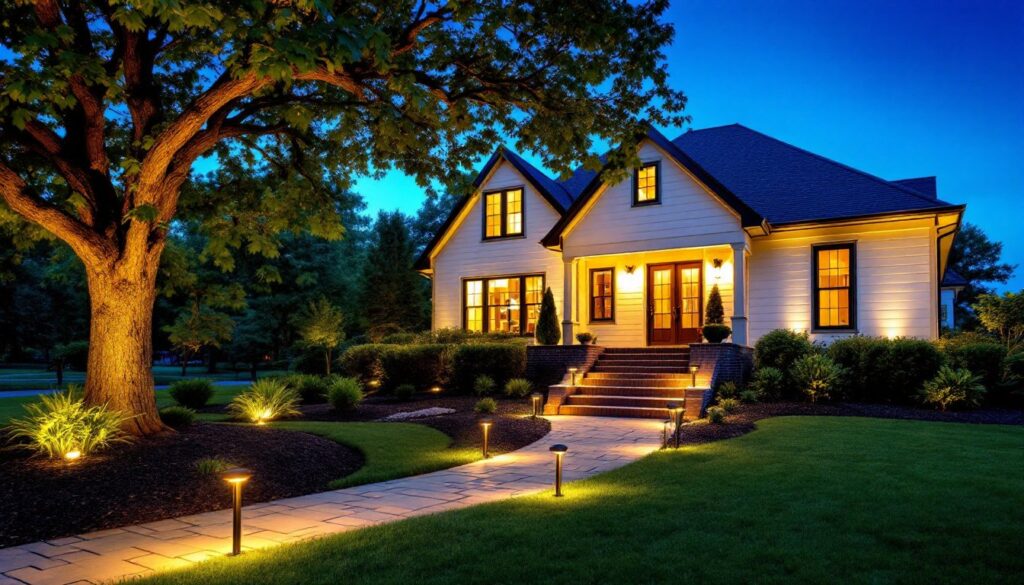
Path lights: $75 to $150 per fixture installed. These low-profile lights line walkways and driveways. They’re typically low-voltage, use 1.5W to 3W LEDs, and mount on stakes driven into the ground. Budget around $600 to $1,200 for a set of eight.
Spotlights and uplights: $100 to $250 per fixture installed. Used to highlight trees, architectural details, or focal points. Higher-wattage LEDs (5W to 10W) and adjustable heads add to the cost. Expect to pay more for bronze or powder-coated aluminum housings.
Well lights: $150 to $300 per fixture installed. These recessed fixtures mount flush with the ground and require excavation, a protective sleeve, and careful drainage planning. They’re ideal for uplighting large trees or stone columns but take more labor to install correctly.
Deck and step lights: $50 to $120 per fixture installed. Surface-mount or recessed LEDs that improve safety on stairs and decking. Line-voltage versions require junction boxes and GFCI protection, which increases install time.
String lights and pergola lighting: $200 to $800 total. Decorative bistro-style lights or integrated pergola systems. Cost depends on cable length, fixture count, and whether the system ties into existing outdoor outlets or needs new wiring.
Transformers cost $100 to $500 depending on wattage capacity. A 300W transformer handles about 20 to 30 low-voltage LED fixtures. Larger properties may need multiple transformers or a single high-capacity unit.
Factors That Affect Installation Costs
Several variables influence the final invoice, and understanding them helps homeowners budget accurately.
Property Size and Layout
Larger lots require more wire, more fixtures, and more labor. A quarter-acre property with a few accent lights might need 200 feet of cable: a one-acre estate with perimeter lighting and multiple zones could require 800 feet or more. Burial-grade 14-gauge or 12-gauge low-voltage cable runs about $0.40 to $0.80 per foot, and labor adds another $1 to $2 per foot for trenching and connection.
Complex layouts, curved pathways, terraced beds, or obstacles like irrigation lines, slow down the install and increase costs. Installers charge more when they have to hand-dig around tree roots or coordinate with existing hardscaping.
Properties with multiple lighting zones (front yard, backyard, side gate) may need separate transformers or a multi-tap system, which adds $150 to $400 per zone.
Wiring and Transformer Requirements
Low-voltage systems (12V or 24V) are the DIY-friendly standard. They don’t require conduit or permits in most jurisdictions, and the risk of shock is minimal. Installation is straightforward: bury direct-burial cable 6 to 8 inches deep, connect fixtures with waterproof wire nuts or quick-connect clips, and plug the system into a transformer mounted near an outdoor outlet.
Line-voltage systems (120V) cost significantly more. They require rigid or flexible conduit, GFCI-protected circuits, and often a permit. In many areas, the NEC (National Electrical Code) mandates that a licensed electrician handle line-voltage outdoor wiring. Budget an additional $500 to $1,500 for conduit, boxes, and labor compared to low-voltage.
Transformer placement matters. If the nearest outdoor outlet is 60 feet from the lighting zone, the installer has to run additional cable or install a new outlet. Adding a GFCI outlet costs $150 to $300, and trenching for a long transformer feed adds more.
Smart transformers with Wi-Fi, timers, and dimming features cost $200 to $500, but they eliminate the need for separate timers and give homeowners app-based control.
DIY vs. Professional Installation: Which Saves More?
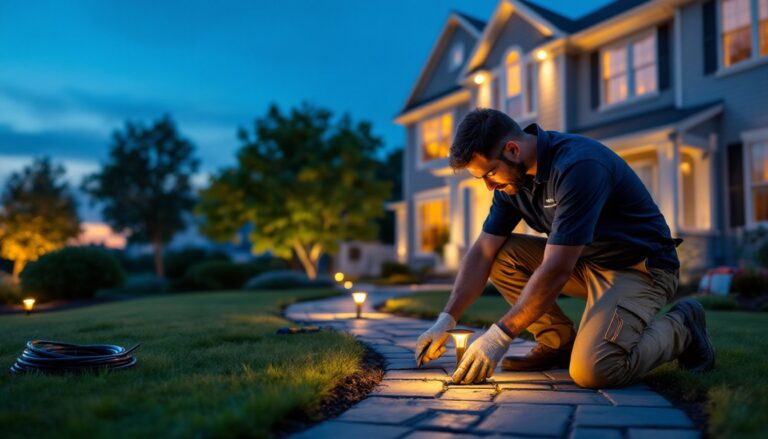
Low-voltage landscape lighting is one of the more approachable outdoor electrical projects, and a confident DIYer can save 40% to 60% on labor by doing the work themselves.
A DIY install for 10 fixtures typically costs $600 to $1,200 in materials: fixtures ($50 to $100 each), a transformer ($150 to $300), cable ($60 to $120 for 200 feet), connectors, and stakes. The work takes a weekend: layout and staking on day one, trenching and wiring on day two. Basic tools include a flat spade, wire strippers, a voltage tester, and a tape measure. No special skills required, just patience and attention to voltage drop.
Voltage drop is the main DIY pitfall. Low-voltage systems lose power over distance, especially on long cable runs. If fixtures at the end of a 100-foot run are noticeably dimmer, the wire gauge is too small or the transformer is undersized. Use planning tools from reputable manufacturers to calculate wire gauge and run length before buying materials.
Professional installation costs $800 to $2,000 in labor for a typical 10-fixture system, but it comes with design expertise, faster completion, and often a warranty. Pros know how to hide wiring, position fixtures for even coverage, and troubleshoot transformer issues. They also carry insurance, which matters if a trench damages an irrigation line or a fixture short-circuits.
Hire a pro if the project involves line-voltage wiring, extensive trenching near utilities, or integration with home automation systems. Most jurisdictions require permits and inspections for 120V outdoor wiring, and homeowner’s insurance may not cover DIY electrical work that causes damage.
For mixed projects, say, adding landscape lighting during a patio build, consider hiring an electrician for the transformer and main feed, then handling fixture placement and burial yourself. That splits the cost and keeps the electrical work code-compliant.
Ways to Reduce Your Landscape Lighting Costs
Landscape lighting doesn’t have to blow the budget. A few strategic choices can cut costs without sacrificing quality or safety.
Start with a phased plan. Install lights in high-priority areas first, front walkway, driveway, and entryway, then add accent lighting later. A four-fixture starter system costs $400 to $800 DIY and can expand as budget allows. Make sure the initial transformer has enough capacity for future zones.
Choose LED fixtures from the start. They cost $10 to $30 more per fixture than halogen, but LEDs use 75% less power, last 15 to 25 years, and rarely need bulb replacements. Over five years, the energy savings alone offset the upfront premium.
Buy fixtures and transformers separately. Kits are convenient but often include mediocre components. Purchasing individual fixtures, a quality transformer, and bulk cable from electrical suppliers or home improvement retailers gives better performance and flexibility. Look for die-cast aluminum or brass housings and fixtures rated for wet locations (UL 1598 or equivalent).
Skip trenching where possible. In planting beds, low-voltage cable can run under mulch with minimal burial, just enough to keep it hidden and protected. For areas with foot traffic, bury cable 6 to 8 inches deep, but don’t over-dig. A flat spade and a little elbow grease beat renting a trencher for small jobs.
Use fewer, better-placed fixtures. Over-lighting is a common mistake. Six well-positioned spotlights create more impact than a dozen scattered path lights. Focus on safety zones first, then add accent lighting to highlight key features.
Buy off-season or during sales. Retailers discount outdoor lighting in late fall and winter. Stock up on fixtures in November or December for spring installation.
Maintain the system. Clean fixture lenses annually, check connections for corrosion, and trim back plants that block light. Regular upkeep prevents costly repairs and extends fixture life.
For cost estimates tailored to specific projects, homeowners can consult online pricing guides or request quotes from local installers. Getting three bids helps identify fair pricing and avoids overpaying.