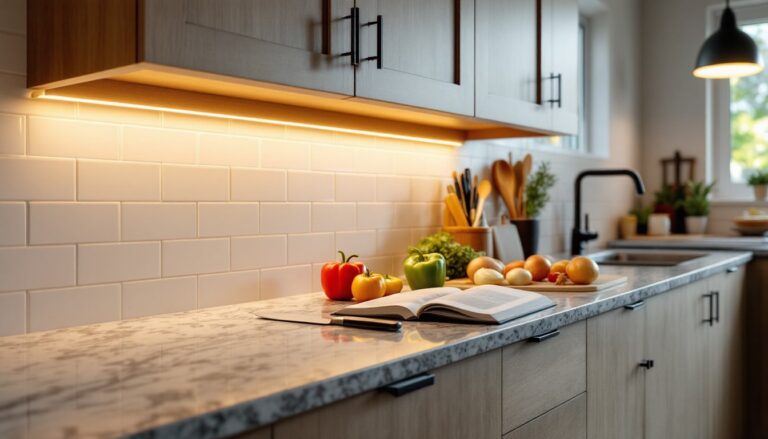
Pendant lights do more than hang from the ceiling, they anchor a room, define work zones, and set the mood. But fixed-brightness fixtures force a compromise: bright enough for prep work or soft enough for dinner? Dimmable pendant lighting solves that problem, giving homeowners control over intensity without swapping bulbs or adding multiple circuits. Whether you’re lighting a kitchen island, dining table, or reading nook, understanding bulb types, dimmer compatibility, and installation basics makes the difference between a flickering headache and a fixture that works seamlessly for years.
Table of Contents
ToggleKey Takeaways
- Dimmable pendant lighting lets homeowners adjust light intensity for different tasks—from full brightness for food prep to low ambient light for dining—without replacing bulbs or adding circuits.
- LED bulbs require trailing-edge dimmers to avoid flickering and buzzing, and must be labeled ‘dimmable’ to ensure smooth dimming performance and prevent damage.
- Dimming an LED bulb to 50% can reduce power consumption by roughly 40% while extending bulb lifespan from 25,000 to 50,000 hours, delivering significant energy savings and cost benefits.
- Install dimmable pendant lights 30–36 inches above kitchen counters or dining tables, with shade materials chosen based on room function—open designs for ambient light, directional shades for task-focused work zones.
- Avoid common mistakes like using non-dimmable bulbs, mismatching dimmer types, ignoring minimum load requirements, and skipping neutral wire checks before installing smart dimmers in older homes.
What Is Dimmable Pendant Lighting and Why Does It Matter?
Dimmable pendant lighting combines a suspended fixture, typically hung 12–36 inches below the ceiling on a cord, chain, or rod, with a dimmer-compatible bulb and a compatible wall switch or smart control. Not all bulbs dim. Standard incandescents do, but many LEDs and CFLs require specific circuitry to avoid flickering, buzzing, or sudden cutoff at low settings.
The “dimmable” label matters because it affects three things: bulb selection, switch hardware, and electrical load calculations. A non-dimmable LED forced onto a dimmer circuit can overheat, shorten lifespan, or fail to dim smoothly. Conversely, a dimmable bulb paired with the wrong switch, say, a magnetic low-voltage dimmer instead of an electronic low-voltage or trailing-edge model, produces the same problems.
Pendants work best in task-focused or ambient roles where height and directionality matter. Unlike recessed cans or flush-mounts, pendants concentrate light downward, making them ideal over islands, tables, or counters. Adding dimming capability extends versatility: full brightness for chopping vegetables, mid-range for assignments, low for dinner.
Key Benefits of Installing Dimmable Pendant Lights in Your Home
Energy savings top the list. Dimming an LED bulb to 50% can reduce power draw by roughly 40%, extending bulb life and cutting utility costs. LEDs already use 75% less energy than incandescent equivalents: dimming amplifies that advantage.
Mood and task flexibility matter more in multi-use spaces. A kitchen island serves as prep station, assignments desk, and cocktail bar. Full brightness (3,000+ lumens) handles food prep: 30% output creates ambiance without sending diners searching for candles. Dimming also reduces glare on screens and glossy countertops.
Fixture longevity improves when bulbs run cooler. Heat degrades LED drivers and phosphor coatings. Operating at 70% output can double bulb lifespan from 25,000 to 50,000 hours, years of use in typical residential settings.
Resale appeal shouldn’t be underestimated. Dimmer switches signal attention to detail. Many home shoppers notice lighting controls in kitchens and dining areas, and platforms like Houzz consistently rank dimming capability among sought-after kitchen features. It’s a low-cost upgrade with outsized perceived value.
How to Choose the Right Dimmable Pendant Light for Your Space
Start with fixture height and diameter. Over a 36-inch-wide island, pendants should measure 12–16 inches in diameter for visual balance. Hang the bottom edge 30–36 inches above the counter: taller users may want 36 inches to avoid head strikes. For dining tables, leave 30–34 inches clearance above the surface.
Shade material affects light spread. Clear glass or open-cage designs throw light in all directions, great for ambient fill but prone to glare. Frosted glass, fabric, or metal shades focus light downward, reducing spill and improving task visibility. Match this to room function: open shades in living areas, directional shades over work zones.
Wattage and lumen output need to suit the task. A single pendant over a 4-foot island should deliver 1,200–1,800 lumens (roughly 100W incandescent equivalent). Multiple pendants can share that load. For dining areas, aim for 30–40 lumens per square foot: kitchens need 50–75 lumens per square foot in prep zones.
Bulb Compatibility and Dimmer Switch Requirements
Bulb type determines dimmer performance. LED bulbs dominate the market but require trailing-edge (reverse-phase) dimmers for smooth, quiet operation. Older leading-edge (forward-phase) dimmers work with incandescents and halogens but often cause LEDs to flicker or hum.
Check the bulb label for “dimmable” and note the minimum load. Most LED-compatible dimmers need 10–15 watts minimum load: a single 6-watt LED may not engage the dimmer properly. If you’re installing a low-wattage fixture, choose a dimmer rated for low loads or add a second fixture to the circuit.
Smart dimmers (Lutron Caséta, Leviton Decora Smart) let homeowners control brightness via app or voice. They bypass traditional load limits by using different circuitry, but cost $40–$80 versus $15–$25 for manual dimmers. If the circuit already has a neutral wire, required by most smart switches, the swap is straightforward.
Color temperature (measured in Kelvin) matters as much as dimming. 2700K bulbs mimic warm incandescent light: 3000K is neutral white: 4000K+ skews blue and clinical. Dimming a 2700K LED makes it even warmer, which feels natural. Dimming a 5000K bulb creates an odd, cold-but-dim effect that confuses the eye.
Best Rooms and Applications for Dimmable Pendant Lighting
Kitchens, especially islands and peninsulas, are prime candidates. Task lighting needs change throughout the day. Morning coffee doesn’t require the same intensity as evening meal prep. Many kitchen island lighting setups benefit from three evenly spaced pendants on a single dimmer, providing uniform coverage and flexible output.
Dining rooms use pendants as both light source and centerpiece. A chandelier-style multi-bulb pendant over a 72-inch table should dim to 20–30% for dinner parties without going fully dark. Pairing a dimmer with a 3-way switch at both entry points avoids the walk-across-a-dark-room problem.
Home offices and reading nooks need adjustable task light. A single pendant with a downward-focused shade over a desk provides 500–700 lumens for screen work and dims for video calls when screen glare becomes an issue.
Bathrooms, particularly over vanities, work well with dual-pendant setups flanking a mirror. Building code (NEC 410.10) requires damp-rated fixtures in zones near tubs or showers. Dimming capability smooths the morning shock of bright light and creates a spa-like feel in the evening. Designers on Digital Trends often highlight dimming as a key feature in smart bathroom upgrades.
Step-by-Step Installation Guide for DIY Homeowners
Safety first: Turn off power at the breaker panel and confirm the circuit is dead with a non-contact voltage tester. Wear safety glasses when working overhead.
1. Remove the old fixture. Unscrew the canopy, disconnect wire nuts, and note wire colors. Most residential circuits use black (hot), white (neutral), and bare copper or green (ground).
2. Install the dimmer switch. If replacing a standard switch, remove the old device, connect the dimmer’s wires per the label (usually black to line, black or red to load, green to ground), and secure it in the box. If the box lacks a neutral wire (white) and you’re installing a smart dimmer, you’ll need to run new wire or use a no-neutral model (less common).
3. Assemble the pendant canopy and mounting bracket. Most pendants ship with a crossbar that screws into the ceiling box. Thread the pendant’s wires through the canopy, attach the crossbar with the provided screws, and hang the fixture’s weight on the bracket before making connections.
4. Connect wires. Match colors: black to black (hot), white to white (neutral), ground to ground. Use twist-on wire connectors rated for the wire gauge (typically 14 or 12 AWG in residential circuits). Tug each connection to confirm it’s secure.
5. Attach the canopy and bulb. Tuck wires into the box, screw the canopy to the crossbar, and install a dimmable LED bulb matching the fixture’s maximum wattage rating. Restore power and test the dimmer’s range.
Permit requirements: Most jurisdictions allow homeowners to replace existing light fixtures without a permit if no new circuits or structural changes are involved. Adding a new junction box or circuit typically requires a permit and inspection under the International Residential Code (IRC). Check with your local building department before starting work beyond a simple swap.
Tool needs: Screwdriver (flathead and Phillips), wire strippers, non-contact voltage tester, ladder. A voltage tester with leads is more reliable than a non-contact model if you’re unsure. A helper steadies the fixture during hookup, preventing wire strain.
Common Mistakes to Avoid When Dimming Pendant Lights
Using non-dimmable bulbs is the most frequent error. Even if the switch dims, the bulb may flicker, buzz, or cut out abruptly. Always verify the “dimmable” label on LED and CFL packaging.
Mismatched dimmer types cause 90% of performance complaints. Magnetic low-voltage dimmers (for older halogen systems) don’t play well with LEDs. Electronic low-voltage (ELV) or trailing-edge dimmers handle most dimmable LEDs smoothly. If you hear buzzing at mid-range, swap the dimmer before blaming the bulb.
Ignoring minimum load requirements leaves single low-wattage LEDs flickering or failing to turn on. If your pendant uses a 5W bulb and the dimmer requires 10W minimum, add a second fixture to the circuit or buy a low-load-compatible dimmer.
Overlooking color temperature consistency creates mismatched light when mixing bulbs. If you install three pendants, use identical bulbs (same brand, model, and Kelvin rating). LED manufacturing tolerances mean even “matching” bulbs from different batches can look slightly off.
Skipping the neutral wire check stalls smart dimmer installs. Most smart dimmers need a neutral (white wire bundle) in the switch box. Older homes often lack neutrals at switch locations, requiring either new wire runs or a no-neutral dimmer model. Resources like The Kitchn often discuss smart lighting retrofits, underscoring the importance of verifying wiring before purchasing hardware.
Hanging pendants too low or too high impacts both function and safety. Too low invites head bumps: too high diffuses light and loses task focus. Stick to the 30–36 inch rule over counters, adjusting slightly for ceiling height and user stature.