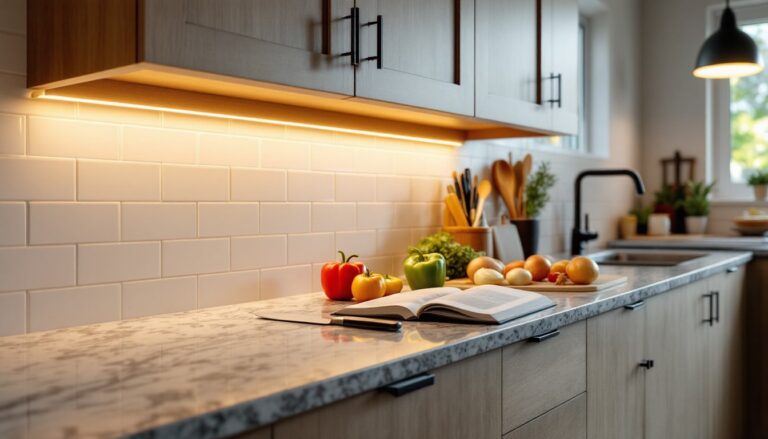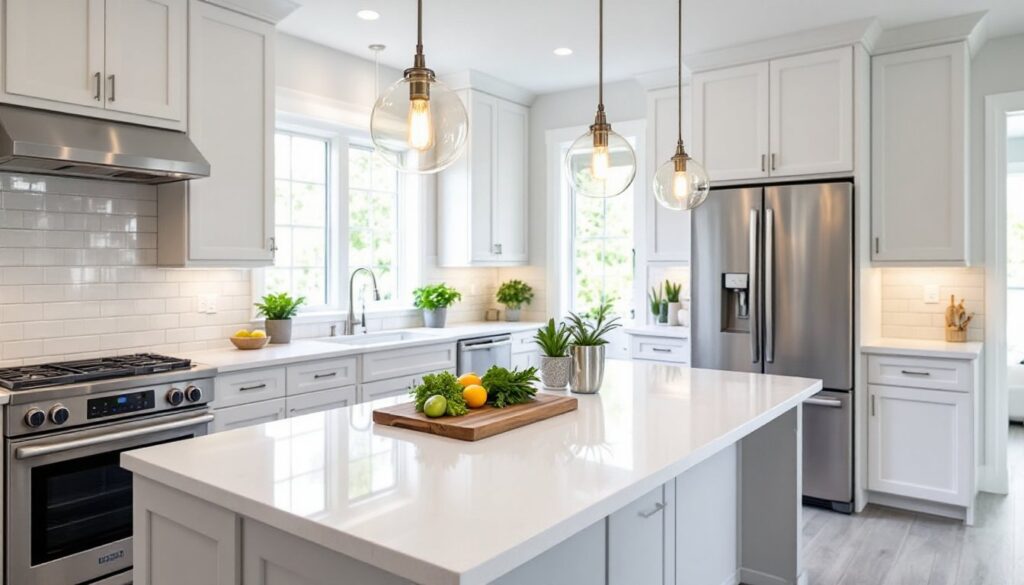
Kitchen lighting has come a long way from a single overhead bulb casting shadows on your cutting board. Hanging fixtures, pendants, chandeliers, and multi-light arrangements, add task illumination exactly where it’s needed while defining zones in open-concept homes. They’re not just decorative. Properly placed hanging lights eliminate glare, highlight countertops, and make prep work safer. Whether retrofitting an old kitchen or roughing in electrical for a new build, understanding fixture types, mounting heights, and wiring basics will help homeowners get both form and function right the first time.
Table of Contents
ToggleKey Takeaways
- Hanging lighting for kitchen fixtures should be mounted 30–36 inches above countertops to reduce eye strain, eliminate shadows, and provide optimal task illumination where hands work.
- Choose pendant diameters using the one-third rule: measure your island in inches and divide by three to determine fixture width, so a 72-inch island needs roughly 24 inches of total lighting coverage.
- Space multiple pendants 24–30 inches apart from center to center, and use painter’s tape to mock up positions before cutting ceiling holes to ensure symmetrical, balanced placement.
- Most hanging kitchen lighting installs use standard 120V junction boxes, but heavier fixtures over 10 pounds require metal or fan-rated boxes anchored to ceiling joists for safety and code compliance.
- Match pendant finishes to cabinet hardware and faucets for a cohesive look, or intentionally mix materials like metal with glass or wood with concrete to add tactile interest without overwhelming the space.
- For dimmable LED chandeliers, verify compatibility with ELV dimmers rather than standard incandescent dimmers to prevent flickering and buzzing issues.
Why Hanging Lights Are Essential for Modern Kitchens
Kitchens demand layered lighting. Recessed cans and under-cabinet strips handle ambient and task needs, but they’re often flat and uninspiring. Hanging fixtures bring vertical interest, directing light downward onto islands, peninsulas, and dining tables where meal prep and family time converge.
From a practical standpoint, fixtures suspended 30–36 inches above a countertop put light exactly where hands work. This reduces eye strain and casts fewer shadows than perimeter lighting alone. For homes with vaulted or high ceilings, hanging lights bridge the gap between the work surface and the soffit, creating intimacy in an otherwise cavernous space.
They also define zones. In open-plan layouts, a trio of pendants over an island signals “this is the kitchen” without needing a wall. That visual anchor helps guests navigate flow and keeps the cook from feeling lost in a sea of square footage. Plus, hanging fixtures are one of the easiest ways to inject personality, industrial cages, blown glass globes, or matte-black drum shades set the tone faster than paint or tile.
Types of Hanging Kitchen Lighting to Consider
Pendant Lights
Pendant lights are the workhorses of kitchen hanging fixtures. They’re single-source lights suspended by a cord, chain, or rod, and they come in diameters from 6 inches to 18 inches or more. Mini-pendants (6–10 inches wide) work well in clusters of two or three over islands or breakfast bars. Larger single pendants suit smaller kitchens or above sink areas, especially if cabinet space is tight.
Materials range from metal and glass to ceramic and woven rattan. Clear glass or open-cage designs let bulbs show, so choose LED filament bulbs if aesthetics matter. Opaque shades, ceramic, painted metal, focus light downward and reduce glare, which is critical if pendants hang in sight lines.
For over-sink installations, mount a single pendant or a pair of mini-pendants 30–36 inches above the basin. If a window sits directly behind the sink, side-mount fixtures on articulating arms to avoid blocking natural light. According to design experts at Remodelista, mixing pendant styles, say, one glass globe with two matte cylinders, can add visual rhythm without chaos, provided finishes or shapes share a common thread.
Wiring is straightforward. Most pendants use a standard 120V junction box. If the canopy is small (under 5 inches), use a pancake box rated for fixture weight. Heavier glass pendants may require a fan-rated or deep 4-inch round box anchored to a ceiling joist or blocking. Always check the fixture’s listed weight and compare it to the box rating.
Chandeliers and Statement Fixtures
Chandeliers aren’t just for dining rooms. Multi-arm or linear chandeliers over islands deliver drama and ample light coverage. Linear chandeliers, long, rectangular fixtures with multiple bulbs, span 30–50 inches and replace the need for three separate pendants. They’re ideal for islands longer than 72 inches and simplify electrical by requiring just one junction box.
Traditional chandeliers with candelabra bulbs work in kitchens with transitional or farmhouse aesthetics. Modern drum chandeliers or geometric cages suit contemporary spaces. Regardless of style, ensure the fixture’s width is proportional: aim for roughly one-third to one-half the width of the island it’s illuminating.
Installation is similar to pendants but often demands a helper. Chandeliers can weigh 15–30 pounds, and holding one overhead while wiring is a recipe for frustration or injury. Use a fan-rated box and, if the ceiling is drywall without backing, install a retrofit fan brace between joists. These expand and lock in place, providing a secure anchor point.
Dimmer compatibility is crucial. Most LED chandeliers require an ELV (electronic low-voltage) dimmer rather than a standard incandescent dimmer. Mismatched dimmers cause flickering and buzzing. Check the fixture’s spec sheet and buy the recommended dimmer model.
How to Choose the Right Size and Placement
Sizing hanging fixtures involves both diameter and drop length. For diameter, use this rule: measure the island or table in inches, then convert one-third of that length to the fixture width. A 72-inch island calls for fixtures totaling roughly 24 inches across, either one 24-inch pendant or three 8-inch mini-pendants spaced evenly.
Drop length (the distance from ceiling to the bottom of the shade) depends on ceiling height and function. Standard 8-foot ceilings require fixtures hung so the bottom sits 30–36 inches above the countertop. Go shorter (30 inches) for task-heavy zones like prep islands: go longer (36 inches) if the island doubles as a dining bar to avoid head bumps. For ceilings above 9 feet, add 3 inches of drop per additional foot of ceiling height.
Spacing between multiple pendants matters. Leave 24–30 inches between fixture centers for a balanced look. For a three-pendant setup over a 72-inch island, center the middle pendant and space the outer two 24 inches from center to center. If the island has seating on one side, shift pendants slightly toward the work side so they’re not directly over diners’ heads.
Measure twice before cutting ceiling holes. Use painter’s tape on the ceiling to mock up fixture positions, then stand back and check symmetry from multiple angles. It’s easier to reposition tape than to patch drywall.
For island lighting layouts, consider task needs. If the island houses a cooktop, avoid placing pendants directly above burners, grease splatter and heat will degrade finishes and create a fire hazard. Position fixtures to the side or use a different lighting strategy, like track or recessed cans, over cooking zones.
Installation Tips for DIY Homeowners
Hanging a pendant or chandelier is a manageable DIY job if electrical is already roughed in. If not, if you’re moving a fixture location or installing in a space with no existing box, consider hiring a licensed electrician for the rough-in. Running new wire through finished ceilings often requires cutting drywall and patching, plus understanding local code for wire routing and junction box placement.
Before starting, shut off power at the breaker and verify it’s dead using a non-contact voltage tester. Assume nothing: testers are cheap insurance. Wear safety glasses and keep a headlamp handy, working overhead in dim light is how wires get crossed.
Mounting the box: If replacing an existing fixture, inspect the old junction box. Plastic boxes rated for 50 pounds are fine for most pendants under 10 pounds. Heavier fixtures need a metal box or a fan-rated box anchored to framing. If there’s no joist at the desired location, use a ceiling fan brace bar that installs through the existing hole and expands to grab joists on either side.
Wiring steps (assuming a standard 120V pendant):
- Thread the fixture’s supply wires through the canopy and into the box.
- Connect black (hot) to black, white (neutral) to white, and green or bare copper (ground) to the box ground screw or incoming ground wire using wire nuts.
- Tuck wires neatly into the box, don’t cram them. Excess wire creates resistance and heat.
- Secure the canopy to the box using the provided screws or mounting strap.
- Install bulbs, restore power, and test.
For multi-pendant setups, each fixture typically needs its own junction box unless you’re using a multi-port canopy designed to split power. These canopies have internal splices and hide under a single decorative plate. They’re code-compliant and simplify DIY installs.
Adjusting drop length: Most pendants use a cord or chain that’s adjustable at install. Measure the desired drop, then either cut the cord and re-strip the wire or loop excess chain inside the canopy. Some fixtures use a rod system with threaded sections, unscrew segments to shorten the drop. Don’t just coil excess cord inside the canopy: it can overheat.
Dimmer installation: If the existing switch is a toggle, replace it with a compatible dimmer. Turn off power, remove the old switch, and connect the dimmer’s leads to the existing line and load wires (usually black). Ground the dimmer to the box if it has a green wire. Modern dimmer switches often require a neutral wire (white): older switch loops may not have one. If there’s no neutral in the box, use a dimmer rated for no-neutral installations or hire an electrician to pull a new cable.
Permits: In most jurisdictions, replacing a fixture on an existing circuit doesn’t require a permit. Adding a new circuit or relocating a junction box does. Check local building department rules. Code compliance isn’t just bureaucratic, it’s about safety and resale value. Unpermitted electrical work can complicate home sales and void insurance claims after a fire.
New lighting trends for 2024 lean toward oversized single pendants and mixed-metal finishes, which often add weight. If upgrading, verify the box can handle it.
Style Ideas to Match Your Kitchen Design
Hanging fixtures should echo the kitchen’s overall aesthetic without shouting. In a modern kitchen with flat-panel cabinets and quartz counters, consider matte-black or brushed-nickel mini-pendants with clean geometric shapes, cylinders, cones, or spheres. Clear glass globes with Edison-style LED bulbs work if the space leans mid-century.
Farmhouse and transitional kitchens pair well with seeded-glass pendants, wire cages, or fixtures with wood accents. Kitchens featuring small spaces benefit from fixtures that don’t visually clutter, slim profiles or glass shades that let light pass through keep the space feeling open.
Industrial styles call for metal shades in aged bronze, galvanized steel, or raw brass. Exposed bulbs and visible hardware add character. If the kitchen has stainless-steel appliances, match metal finishes or intentionally contrast, warm brass against cool stainless creates tension that works if other elements (cabinet hardware, faucet) tie it together.
For coastal or Scandinavian aesthetics, white or light wood pendants with woven rattan or linen shades soften the space. Pair these with ample natural light and pale cabinetry for an airy feel. Ideas from The Kitchn often showcase these lighter palettes combined with functional task lighting.
Color and finish consistency: Match pendant finishes to cabinet hardware and faucets for a cohesive look, or intentionally mismatch for an eclectic vibe. If going eclectic, keep shapes similar, three different finishes in the same dome shape reads as intentional, while three wildly different shapes in different finishes reads as chaotic.
Bulb choice affects mood. Warm white (2700–3000K) bulbs create a cozy, inviting feel: cool white (3500–4100K) is better for task-heavy zones. Dimmable LEDs let homeowners shift between bright task light during meal prep and softer ambient light during dinner. For galley kitchens, a single pendant or pair can replace harsh overhead fluorescents and define the narrow space without overwhelming it.
According to trend watchers at Homify, pendant installations over islands are increasingly mixing materials, metal with glass, or wood with concrete, to add tactile interest. Just ensure all fixtures share at least one common design element: finish, shape, or scale.
For kitchens with existing recessed lighting layouts, hanging fixtures should complement, not duplicate, existing coverage. If cans provide ample ambient light, use pendants strictly for task and accent. If recessed cans are sparse, choose fixtures with wider shades that diffuse light across a broader area.
Finally, consider the view from adjacent rooms. In open-concept homes, hanging fixtures are visible from the living or dining area. Select designs that coordinate with those spaces or serve as a deliberate focal point that bridges the zones. A dramatic linear chandelier can anchor the kitchen while visually connecting to a dining room pendant or living room fixture in a complementary style.