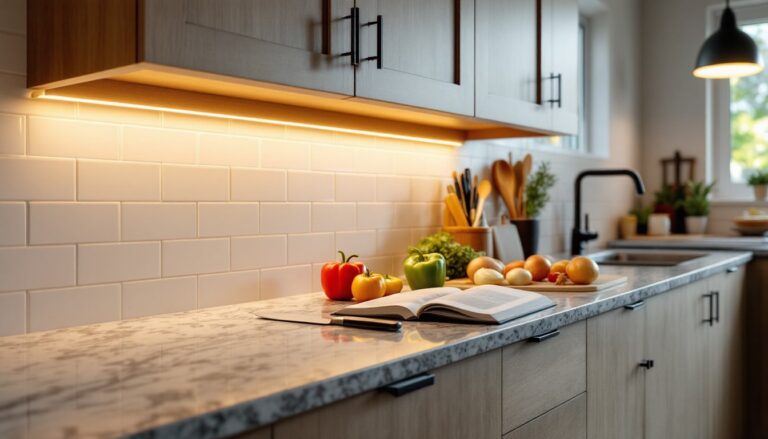
Upgrading to LED lighting in the kitchen isn’t just about following a trend, it’s a practical move that improves visibility, cuts energy costs, and gives homeowners control over color and brightness. LEDs have replaced fluorescent and incandescent bulbs in most new builds and remodels, and for good reason. They last longer, run cooler, and offer more design flexibility than older technologies. Whether someone’s planning a full kitchen renovation or just swapping out a few fixtures, understanding how LEDs work in different zones makes the difference between a well-lit workspace and a kitchen that feels flat or shadowy.
Table of Contents
ToggleKey Takeaways
- Kitchen LED lighting uses 75% less energy than incandescent bulbs and lasts up to 25 times longer, reducing maintenance and operating costs over a decade of use.
- Effective kitchen LED lighting requires layering task, ambient, and accent lighting across different zones—under-cabinet strips for countertops, recessed cans for overall illumination, and accent fixtures for visual depth.
- Color temperature matters: use warm white (2700K–3000K) for ambient and accent lighting to create an inviting atmosphere, and daylight (4500K–5000K) for task areas to improve visibility and color accuracy.
- Task lighting over islands, sinks, and prep areas should deliver 450–900 lumens per fixture, while total ambient lighting needs 50–75 lumens per square foot—a 120-square-foot kitchen requires roughly 6,000–9,000 total lumens.
- Many kitchen LED upgrades are DIY-friendly, especially plug-in under-cabinet kits and retrofit recessed lights, but hardwired installations, wet locations, and new circuits should be handled by a licensed electrician to ensure code compliance.
- Choose LED bulbs and fixtures with CRI 90 or higher for accurate color rendering in kitchens, and confirm dimming compatibility before purchasing to avoid flickering or buzzing with standard dimmer switches.
Why LED Lighting Is the Smart Choice for Your Kitchen
LED technology has fundamentally changed residential lighting. Traditional incandescent bulbs convert most of their energy into heat, not light, which wastes electricity and adds unnecessary warmth to a kitchen that’s already running appliances. LEDs, by contrast, use about 75% less energy and last up to 25 times longer than incandescent bulbs, according to Department of Energy data.
In practical terms, a quality LED bulb rated for 50,000 hours can run for over a decade under normal kitchen use. That means fewer ladder trips to replace burned-out bulbs above cabinets or in recessed cans. LEDs also produce minimal heat, which matters when fixtures sit near wood cabinetry or inside enclosed soffits.
Another advantage: dimming capability. Most LED fixtures and bulbs work with standard dimmer switches (though it’s worth confirming compatibility before purchasing). This lets homeowners dial light levels up for meal prep and down for ambient evening lighting. Color temperature is adjustable too, ranging from warm 2700K tones that mimic incandescent glow to cool 5000K daylight hues that improve task visibility. Cost varies by fixture type and brand, but LED under-cabinet strips typically run $20–$60 per section, while recessed LED retrofit kits range from $10–$30 per can, depending on features and lumens.
Types of LED Lighting for Every Kitchen Zone
Task Lighting: Illuminating Counters and Workspaces
Task lighting targets specific work areas where precision matters, cutting, chopping, reading recipes, or inspecting food quality. The most common task lighting application is under-cabinet LED strips or puck lights mounted to the underside of wall cabinets. These fixtures eliminate shadows cast by overhead lighting and provide direct, focused illumination on countertops.
LED strip lights come in two main types: rigid bars and flexible strips. Rigid bars offer a cleaner, more finished look and usually include diffusers to soften the light and prevent hotspots. Flexible strips are easier to route around corners or inside cabinets but often show individual LED dots without a diffuser. Both types are available in plug-in and hardwired versions. Plug-in models are DIY-friendly, just mount the fixture and run the cord to an outlet. Hardwired installations require basic electrical skills and may need a junction box, depending on local code.
Another effective task solution: recessed LED downlights positioned directly over islands, peninsulas, or sink areas. Spacing matters here. For standard 8-foot ceilings, placing recessed lights 18–24 inches from the wall cabinet face and spacing them 24–30 inches apart provides even coverage without dark gaps. The best under-cabinet lighting options reviewed by experts emphasize lumen output and ease of installation.
Pendant lights work well over islands when task lighting is secondary to style, but they should be supplemented with under-cabinet or recessed lights for countertop work zones. Pendants alone rarely provide enough direct light for detailed tasks.
Ambient and Accent Lighting Options
Ambient lighting is the general, overall illumination that fills the kitchen. Most kitchens rely on a combination of recessed cans, flush-mount or semi-flush ceiling fixtures, and natural light from windows. LED recessed lights in 4-inch or 6-inch housings are the workhorse here. For ambient purposes, aim for a total of 50–75 lumens per square foot. A 120-square-foot kitchen would need roughly 6,000–9,000 total lumens, distributed across multiple fixtures.
Accent lighting highlights architectural details, open shelving, or decorative elements. In kitchens, accent lighting often includes:
- In-cabinet LED strips or puck lights inside glass-front cabinets to showcase dishware
- LED tape lighting along the top of cabinets (toe-kick lighting also falls into this category)
- Linear LED fixtures mounted above open shelves or along soffits
These accents add depth and visual interest, especially in modern lighting trends that prioritize layered lighting over a single overhead source. When planning accent lighting, use fixtures rated for warm white (2700K–3000K) to create a cozy, inviting atmosphere rather than a clinical feel.
How to Plan Your Kitchen LED Lighting Layout
Start with a scaled floor plan. Mark the locations of cabinets, appliances, islands, and any structural elements like soffits or beams. Identify work zones: prep areas, cooktop, sink, and eating spaces. Each zone needs dedicated task lighting, plus general ambient coverage.
For under-cabinet task lighting, measure the linear feet of base cabinets that need coverage. Most LED strips or bars are sold in 12-inch, 18-inch, or 24-inch sections. Plan to mount fixtures 2–3 inches from the front edge of the cabinet to minimize glare. If cabinets have a lip or face frame, position lights behind it so they’re hidden from view when standing.
Recessed lighting requires attention to joist direction and spacing. Standard 6-inch recessed cans need at least 6 inches of clearance above the ceiling, which can be an issue in homes with shallow joist bays or existing ductwork. Low-profile retrofit LED kits fit housings as shallow as 2 inches but may offer fewer lumens. A typical recessed lighting layout spaces fixtures in a grid pattern, with lights centered over key work zones.
For kitchens with challenging dimensions, such as narrow galley layouts or low ceilings, consider flush-mount LED panels or track lighting instead of recessed cans. Track systems offer flexibility to aim light where it’s needed without cutting into ceilings.
Don’t forget controls. Install dimmer switches compatible with LEDs, not all dimmers work well with LED loads, and mismatched components can cause flickering or buzzing. For advanced setups, smart switches or wireless controls let users adjust brightness and color temperature from a phone or voice assistant. Homes embracing smart home technology often integrate lighting into broader automation systems.
Finally, check local code. Some jurisdictions require permits for hardwired lighting installations, especially if they involve running new circuits or modifying junction boxes. When in doubt, consult the National Electrical Code (NEC) or hire a licensed electrician.
Installing LED Lighting: DIY Tips and Professional Considerations
Many LED upgrades are DIY-friendly, especially plug-in under-cabinet kits and retrofit recessed lights. Here’s what to know before starting:
Under-Cabinet LED Installation (Plug-In):
- Turn off power at the breaker if working near existing outlets.
- Clean the cabinet underside. Dust and grease prevent adhesive from sticking.
- Measure and mark fixture placement. Use a level to keep strips straight.
- Peel backing and press LED strip or bar into place. Some kits include mounting clips for added security.
- Route the cord to the nearest outlet. Use cord clips or wire channels to keep cables tidy and out of sight.
Hardwired Under-Cabinet LED Installation:
This requires basic electrical skills. Most hardwired fixtures connect to a junction box, often fed by a switch-controlled circuit. Steps include:
- Turn off power and verify with a non-contact voltage tester.
- Remove any existing fixture and inspect the junction box.
- Connect fixture wires: black (hot) to black, white (neutral) to white, green or bare (ground) to ground.
- Secure wire connections with wire nuts and tuck neatly into the box.
- Mount the fixture per manufacturer instructions.
- Restore power and test.
Recessed LED Retrofit Kits:
Retrofit kits replace old bulbs and trim in existing recessed cans without rewiring. Most snap or twist into place and plug into the existing socket. Installation takes about 5 minutes per light. For new construction, installing recessed housings requires cutting ceiling holes, running cable, and connecting to a circuit, work that’s best left to an electrician unless the installer has experience with residential wiring.
When to Call a Professional:
- Adding new circuits or relocating a panel
- Installing fixtures in wet or damp locations (near sinks or above cooktops)
- Working with aluminum wiring or knob-and-tube systems
- Any project that feels beyond current skill level
Safety Gear:
Always wear safety glasses when drilling overhead or cutting into ceilings. Use a sturdy ladder and, if working in an attic, watch for insulation and exposed nails. A dust mask helps when cutting drywall or working in dusty spaces.
For those unsure about electrical work, hiring a licensed electrician typically costs $75–$150 per hour, depending on region and scope. The peace of mind and code compliance are worth it.
Choosing the Right Color Temperature and Brightness
Color temperature, measured in Kelvin (K), changes how a kitchen feels. Lower numbers produce warmer, yellower light: higher numbers skew cool and blue-white. Here’s a quick breakdown:
- 2700K–3000K (Warm White): Mimics incandescent bulbs. Best for ambient and accent lighting. Creates a cozy, inviting atmosphere. Works well in dining areas and above cabinetry.
- 3500K–4000K (Neutral White): Balanced tone that works for both task and ambient lighting. Popular in modern kitchens.
- 4500K–5000K (Daylight): Crisp, bright light that improves color accuracy. Ideal for task lighting over counters, islands, and sinks. Can feel clinical if used exclusively.
Many homeowners mix temperatures: warm for ambient and accent, daylight for task zones. Some LED fixtures offer tunable white technology, allowing users to adjust color temperature throughout the day.
Brightness (Lumens):
Lumens measure total light output. Watts no longer indicate brightness with LEDs, a 10-watt LED can produce as much light as a 60-watt incandescent. For kitchens:
- Task lighting: 450–900 lumens per fixture (under-cabinet strips or individual puck lights)
- Ambient lighting: 50–75 lumens per square foot total
- Accent lighting: 150–300 lumens per fixture (enough to highlight without overpowering)
Check the lumens-per-watt ratio on packaging. Efficient LEDs deliver 80–100 lumens per watt. Anything lower suggests older or lower-quality technology.
Color Rendering Index (CRI):
CRI rates how accurately a light source reveals true colors, on a scale of 0–100. For kitchens, aim for CRI 90 or higher. This matters when judging food doneness or matching paint samples. Lower-CRI LEDs can make reds look muddy or greens appear dull. Many small kitchen designs benefit from high-CRI lighting to maximize perceived space and color vibrancy.
Dimming range is another consideration. Budget LEDs may only dim to 30–40%, while premium models dim to 5–10%. If ambiance control is important, confirm dimming specs before purchasing.
Finally, consider sources like The Kitchn for practical advice on kitchen design and how lighting integrates with layout, finishes, and workflow. Lighting isn’t an afterthought, it’s a functional tool that shapes how a kitchen performs and feels every day.