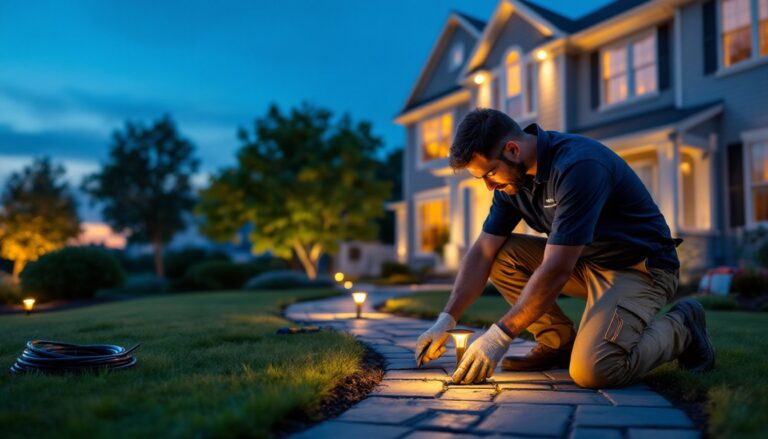
Adding landscape lighting transforms a dark yard into a functional, safe, and attractive space after sunset. Whether highlighting architectural features, illuminating walkways, or creating ambiance for outdoor gatherings, the right lighting setup changes how homeowners use their property. Lowe’s offers a wide selection of landscape lighting systems suited to DIY installation, from budget-friendly solar stakes to professional-grade low-voltage kits. This guide walks through product options, installation steps, and design strategies to help homeowners confidently tackle outdoor lighting projects without hiring an electrician.
Table of Contents
ToggleKey Takeaways
- Lowe’s landscape lighting offers DIY-friendly, low-voltage systems (12V) that don’t require electrical permits and avoid the cost of hiring a professional contractor.
- Path lights, spotlights, and floodlights serve different functions—combine multiple types to create depth and layered ambiance rather than relying on a single light source.
- Proper installation requires trenching to 6–10 inches, voltage testing (10.8–12V per fixture), and 8–10 foot spacing between fixtures to ensure even coverage without dark spots.
- Solar path lights suit renters and avoid wiring but deliver limited runtime (4–8 hours); wired low-voltage fixtures provide consistent brightness regardless of weather conditions.
- Choose fixtures with IP65+ ratings, aluminum construction, and adjustable mounts to resist corrosion and weather extremes while allowing seasonal repositioning as plants grow.
- Avoid overlighting and glare by using fixtures with shields, matching color temperature throughout the yard (typically 3000K warm white for residential settings), and testing the system for a week before finalizing placement.
Why Choose Lowe’s for Your Landscape Lighting Project
Lowe’s provides a practical middle ground for landscape lighting, better selection than big-box competitors, more accessible than specialty lighting showrooms, and easier on the wallet than ordering through a landscape contractor.
The in-store lighting aisle displays working demos of most systems, letting homeowners see beam spread, color temperature, and fixture build quality before buying. Staff can typically answer basic voltage questions and recommend starter kits based on yard size. Online ordering adds hundreds more SKUs, with customer reviews highlighting real-world performance issues like lens fogging or stakes breaking in clay soil.
Most Lowe’s-stocked brands (Portfolio, Malibu, Hampton Bay) offer low-voltage systems running on 12V transformers, which don’t require an electrical permit in most jurisdictions. These systems are DIY-friendly, shock-safe during installation, and expandable as budgets allow. Lowe’s also stocks compatible components, extra wire, connectors, spare bulbs, so homeowners aren’t forced into proprietary ecosystems.
Return policies matter for outdoor lighting. Fixtures might look fine in the box but fail after one rainstorm. Lowe’s accepts returns on most lighting within 90 days with a receipt, and their commercial accounts desk can assist contractors buying in bulk for larger projects.
Types of Landscape Lighting Available at Lowe’s
Lowe’s organizes landscape lighting into categories based on function. Understanding these types helps homeowners match fixtures to specific needs rather than buying a random assortment.
Path and Walkway Lights
These short fixtures (typically 8–18 inches tall) line sidewalks, driveways, and garden paths. They provide downward illumination to prevent tripping hazards without creating glare at eye level.
Solar path lights are the easiest install, no wiring, just stake and go. They work well in sunny yards but struggle under tree canopy or in northern climates with short winter days. Expect 4–8 hours of runtime after a full charge. Lowe’s solar options typically use 0.06W LEDs, adequate for marking a path but not bright enough for task lighting.
Low-voltage wired path lights deliver consistent brightness regardless of weather. Most draw 1–3W per fixture and connect via wire runs buried 6 inches deep. Lowe’s sells these in kits (usually 6–10 lights plus transformer) or individually. Look for fixtures with metal stakes rather than plastic, they survive freeze-thaw cycles better.
Color temperature matters. 3000K warm white mimics incandescent bulbs and suits traditional homes, while 4000K neutral white provides better visibility for security-focused lighting. Many contemporary design approaches favor the cleaner look of neutral tones in modern landscapes.
Spotlights and Floodlights
These fixtures cast focused or wide beams upward or outward, used to highlight trees, architectural details, or outdoor living areas.
Spotlights (also called uplights or bullet lights) produce narrow beams (15–35 degrees) to accent focal points. A 3W LED spotlight can effectively light a tree up to 15 feet tall. Adjustable heads let homeowners tweak aim after installation. Lowe’s carries both ground-stake and surface-mount versions.
Floodlights spread illumination across 60–120 degrees, suitable for lighting wide areas like patios or the side of a house. These typically run 5–10W and can sometimes create harsh shadows if positioned poorly. Use floods sparingly, overlapping multiple spotlights often creates better depth and texture than one bright flood.
Both types benefit from integrated transformers with photocells and timers. Lowe’s transformers range from 45W (supporting roughly 15 small fixtures) to 300W (for extensive systems). Always leave 20% headroom on transformer capacity to prevent overheating.
Step-by-Step Installation Guide for DIY Homeowners
Installing low-voltage landscape lighting is a manageable weekend project for most homeowners. The process involves planning, trenching, wiring, and final adjustments.
Materials and Tools Needed:
- Low-voltage lighting kit (transformer, fixtures, wire, connectors)
- Flat-blade shovel or trenching spade
- Wire strippers
- Voltage tester (multimeter)
- Safety glasses and work gloves
- Landscape marking paint
- Garden hose (for layout mock-up)
Installation Steps:
-
Plan the layout. Lay out garden hose or rope to represent wire runs. Place fixtures along the path to visualize spacing (typically 8–10 feet apart for path lights). Mark locations with landscape paint.
-
Mount the transformer. Install it near a GFCI-protected outdoor outlet, at least 12 inches above grade to prevent water contact. Most transformers include mounting brackets for siding or posts. Do not install transformers inside enclosed spaces, they generate heat.
-
Dig trenches. Use a flat shovel to cut a 6-inch-deep slit along your marked wire runs. In areas with foot traffic or lawn equipment, go deeper (8–10 inches). Save the sod to replace after wiring.
-
Run wire. Most Lowe’s kits include 12-gauge or 14-gauge wire. Twelve-gauge supports longer runs (up to 100 feet from transformer) with less voltage drop. Lay wire loosely in trenches, don’t pull it taut, as ground movement can stress connections.
-
Connect fixtures. Most systems use quick-connect clips that pierce wire insulation, eliminating the need for wire stripping. Position clips, insert the wire, and snap shut. Alternatively, some fixtures require wire nuts, strip 1/2 inch of insulation, twist wires together, and secure with the nut.
-
Test before burying. Connect the transformer and turn on the system. Walk the entire run with a voltage tester, checking that each fixture receives 10.8–12V. If voltage drops below 10.5V at the end of the run, use heavier gauge wire or split the run into two separate circuits.
-
Adjust fixture positions. Fine-tune aiming angles. Spotlights on trees typically position 12–24 inches from the trunk. For path lights, ensure the beam pattern overlaps slightly between fixtures to avoid dark spots.
-
Bury wire and backfill trenches. Cover wire with soil, tamp lightly, and replace sod. Leave a small loop of slack wire at each fixture for future adjustments or replacements.
-
Program the transformer. Set the timer or photocell according to desired operating hours. Many homeowners run lights from dusk until 11 PM, then again from 5 AM until dawn, balancing visibility with energy use.
Permit Note: Low-voltage systems (under 30V) typically don’t require electrical permits, but always check local building codes. If tying into household electrical beyond a simple plug-in, consult a licensed electrician.
Top Lowe’s Landscape Lighting Products to Consider
Navigating Lowe’s lighting aisle becomes easier when focusing on proven product lines with strong customer feedback and reliable warranties.
Portfolio 8-Light Low-Voltage Landscape Kit is a consistent best-seller. It includes eight path lights, a 45W transformer with timer, 50 feet of wire, and connectors, everything needed for a basic installation. The aluminum fixtures resist corrosion better than cheaper plastic models. This kit suits front walkways or small garden beds. Priced around $80–$100, it’s a solid entry point for first-time DIYers.
Malibu LED Floodlight (10W) delivers bright, adjustable illumination for larger trees or building facades. The cast-aluminum housing and tempered glass lens withstand weather extremes. It uses a ground stake for lawn installation or can mount directly to hardscape with included screws. Beam spread adjusts via a rotating head. Single fixtures run about $30, making them cost-effective for targeted accents.
Hampton Bay Solar Bronze Path Lights (6-Pack) offer wireless convenience for renters or homeowners avoiding trenching. Each fixture produces approximately 10 lumens (enough to mark a path but not illuminate it fully). The bronze finish blends into traditional landscaping better than black or silver. At roughly $40 for six lights, they’re a low-commitment test for solar performance in a specific yard.
Portfolio 300W Transformer is a must for expanding systems beyond starter kits. It supports up to 100 fixtures (depending on wattage) and includes three output taps for separate lighting zones. The built-in photocell and digital timer allow precise scheduling, and the weather-resistant housing meets UL rating for outdoor use. Expect to pay $120–$150. This transformer suits homeowners planning phased installations, start with one zone, add more as budget allows.
When comparing products, check the IP rating (Ingress Protection). Fixtures rated IP65 or higher resist dust and water jets, crucial for areas with sprinkler overspray. Cheaper fixtures often skimp here, leading to early failures.
Design Tips for Creating the Perfect Outdoor Ambiance
Effective landscape lighting balances aesthetics, safety, and energy efficiency. Thoughtful design elevates curb appeal without overwhelming the yard with light pollution.
Layer lighting types. Combine path lights for safety, spotlights for focal points, and subtle downlighting from trees or eaves for ambient fill. Single-purpose lighting schemes look flat: layered approaches create depth. For inspiration on balancing function and style, designers often reference outdoor living concepts that emphasize natural material pairings.
Avoid overlighting. More fixtures don’t always mean better results. Overly bright yards lose mystery and can annoy neighbors. Aim for “moon glow” levels, enough light to navigate safely while preserving the nighttime character of the landscape. Resist the urge to light every plant: select a few standout specimens to highlight.
Use fixtures with shields or hoods. Glare from exposed bulbs ruins the effect. Quality fixtures direct light downward or onto the target, keeping the source hidden from direct sightlines. This principle, called “dark sky compliance,” reduces light pollution and focuses attention where it belongs.
Match color temperature across the yard. Mixing 3000K warm white and 5000K daylight creates a disjointed look. Stick with one temperature family. Warm white suits residential settings: cooler tones work for modern architecture or security applications.
Plan for plant growth. That spotlight aimed perfectly at a young maple will miss the mark in three years as the tree matures. Position fixtures with adjustable mounts, and leave slack in wire runs for future repositioning. Schedule an annual review each spring to tweak angles.
Consider specialty applications. Well lights (recessed ground fixtures) work under decks or in planter beds where protruding fixtures would be trip hazards. Deck post cap lights illuminate stairs and railings without running low-voltage wire. Some projects, especially those involving extensive hardscaping, benefit from professional input found through platforms like Houzz, where contractors and designers showcase portfolio work.
Test before finalizing. Run the system for a week before backfilling all trenches. Walk the property at night with a notebook. Are there dark spots? Glare points? Shadows in unexpected places? Make adjustments while access is easy.
Landscape lighting isn’t static. Seasonal changes affect how light interacts with foliage, and fixture positions that work in summer may need tweaking once trees lose leaves. Flexibility in design pays long-term dividends.