Industrial pendant lighting brings raw, honest materials, metal cages, exposed bulbs, oversized shades, straight from the factory floor into your home. It’s a design choice that says you value function as much as form, and you’re not afraid of a little edge. Whether you’re renovating a kitchen, updating a dining room, or adding character to a bedroom, industrial pendants offer versatility, visual weight, and a dose of modern grit. This guide walks through what defines the style, why it works in residential spaces, where to hang it, and how to choose and install fixtures that’ll look intentional, not accidental.
Table of Contents
ToggleKey Takeaways
- Industrial pendant lighting combines durability, visual impact, and design flexibility by using exposed metal, visible bulbs, and geometric shades that work across kitchens, dining rooms, and modern farmhouses.
- Proper sizing and placement matter: hang pendants 30–36 inches above kitchen countertops, space fixtures 24–40 inches apart depending on size, and ensure they’re centered at least 30 inches above dining tables.
- When selecting industrial pendants, prioritize finish (matte black is most versatile), bulb type (LED filament for warmth and efficiency), and installation compatibility with your ceiling height and existing electrical infrastructure.
- Installation requires turning off power at the breaker, confirming your junction box supports the pendant’s weight, and following NEC code standards—hiring a licensed electrician is recommended for new wiring runs.
- Balance raw industrial materials with softer textures like linen, wool, and natural wood to prevent the space from feeling cold, and layer your lighting with recessed cans and under-cabinet strips for functional ambiance.
- Budget options start around $50 per pendant, while handcrafted high-end pieces can exceed $300, offering strong visual impact and design flexibility at various price points.
What Is Industrial Pendant Lighting?
Industrial pendant lighting borrows its design language from early 20th-century factories, warehouses, and workshops, places where lighting was purely utilitarian. The hallmarks include exposed metal hardware, often in matte black, galvanized steel, brushed nickel, or aged bronze finishes. Bulbs are frequently visible, whether they’re vintage-style Edison bulbs with visible filaments or modern LED equivalents that mimic the warm glow.
Shades tend to be oversized and geometric: dome shades, cone shapes, or wire cages. Materials lean heavily on steel, iron, aluminum, and occasionally copper or brass for warmer tones. Unlike ornate chandeliers or minimalist Scandinavian designs, industrial pendants embrace imperfection, think rivets, seams, and patina.
The style pairs well with reclaimed wood, exposed brick, concrete floors, and open shelving. It’s at home in lofts and modern farmhouses alike. But don’t mistake “industrial” for “cold.” When balanced with warmer textures and finishes, these fixtures add character without making a space feel sterile or overly themed.
Why Choose Industrial Pendant Lights for Your Home
First, they’re durable. Most industrial pendants are built with heavy-gauge metal and quality hardware, no flimsy plastic or particle board. If you’re lighting a high-traffic kitchen or a workspace, that matters.
Second, they scale well. A single large pendant can anchor a small dining table, while a row of three or five pendants works beautifully over a kitchen island. The clean lines and bold profiles make them easy to repeat without visual clutter.
Third, they’re design-flexible. Industrial style isn’t locked into one aesthetic. Pair black metal pendants with white subway tile for a classic look, or combine them with butcher block countertops and open shelving for a warmer, rustic vibe. Designers at Dwell frequently feature industrial fixtures in spaces that blend mid-century modern furniture with contemporary finishes.
Finally, they’re widely available and price-accessible. You’ll find quality options from big-box home improvement stores, specialty lighting retailers, and online marketplaces. Budget fixtures start around $50 per pendant, while high-end, handcrafted pieces can run $300 or more. Either way, the look delivers more visual impact per dollar than many decorative styles.
Best Rooms for Industrial Pendant Lighting
Industrial pendants shine in areas where task lighting and ambiance overlap. Kitchens, dining rooms, entryways, and home offices are prime candidates. Bedrooms and bathrooms can work, too, if the fixture scale and finish suit the room’s proportions.
Kitchen and Dining Areas
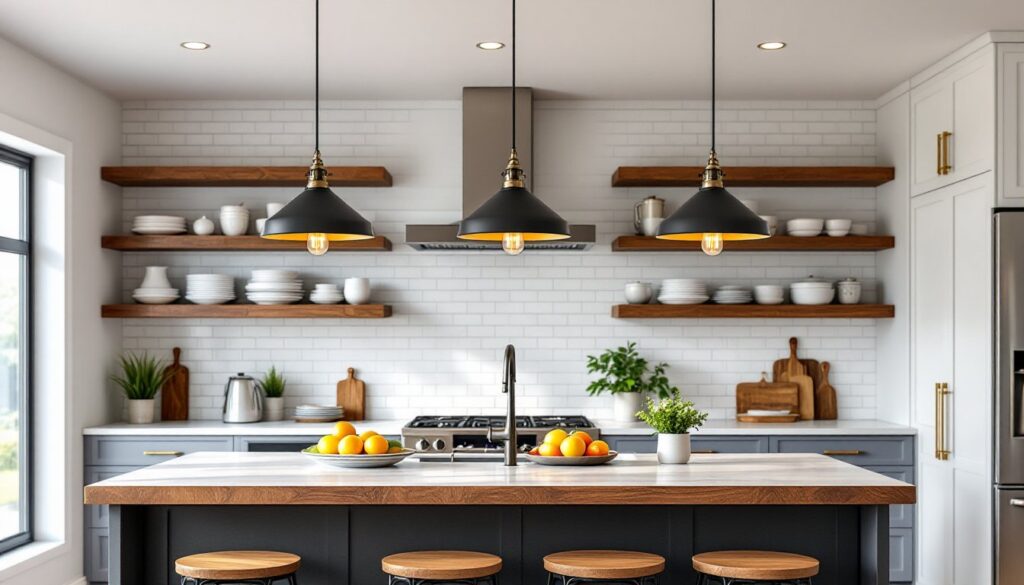
Kitchens are the most common application. Hanging pendants over an island or peninsula provides focused light for food prep while defining the workspace visually. Standard practice is to hang fixtures 30 to 36 inches above the countertop to avoid head clearance issues and glare.
For islands, plan for one pendant per 24 to 30 inches of counter length if using smaller fixtures (8–12 inches in diameter), or space larger pendants (14–20 inches) 36 to 40 inches apart. If the island has seating, make sure pendants don’t block sightlines between seated guests and standing hosts.
Dining rooms benefit from a single statement pendant or a cluster of smaller ones centered over the table. The bottom of the fixture should sit 30 to 34 inches above the table surface. This ensures the light pool covers the table without blinding diners. Many homeowners pair industrial pendants with kitchen lighting over the island to create a cohesive look that extends from prep zones to eating areas.
In open-plan homes, using the same pendant style in both kitchen and dining zones ties the spaces together without requiring a full lighting redesign. Just vary the size or finish slightly to distinguish the zones.
How to Select the Right Industrial Pendant Light
Start with scale. Measure your space. For an island, add the length and width (in feet), then convert that sum to inches, that’s a safe maximum diameter for a single pendant. For example, a 6-foot by 3-foot island (6 + 3 = 9) can handle a pendant up to about 9 inches in diameter per fixture, or one large 18-inch pendant centered.
Next, consider finish and material. Matte black is the most versatile and pairs with stainless appliances, white cabinetry, and natural wood. Galvanized or brushed steel works well in cooler, more modern spaces. Oil-rubbed bronze or aged copper adds warmth and works alongside traditional or transitional styles.
Bulb type matters for both aesthetics and function. Vintage Edison bulbs (typically 40–60 watts incandescent equivalent) create ambiance but aren’t bright enough for task lighting on their own. LED filament bulbs offer the same look with better efficiency and longevity, look for 2200K to 2700K color temperature for warm light. If you need brighter task lighting, choose fixtures that accommodate higher-lumen LEDs or use multiple pendants.
Check the cord or rod length. Most pendants ship with adjustable cords or downrods. Standard ceiling height is 8 feet: if yours is higher, confirm the fixture can extend far enough. Conversely, if ceilings are low (7 feet or less), look for flush- or semi-flush-mount industrial fixtures instead.
Finally, think about installation compatibility. Some pendants hardwire directly into a junction box: others use a canopy and cord that can be swag-hung from a ceiling hook. If you’re replacing an existing fixture, hardwiring is straightforward. If you’re adding new pendant locations, you’ll need to run electrical, either by hiring a licensed electrician or pulling permits for DIY work if your jurisdiction allows it. Always follow NEC (National Electrical Code) requirements for junction box support and wire gauge.
Installation Tips for Industrial Pendant Fixtures
Safety first: Turn off power at the breaker, not just the switch. Use a non-contact voltage tester to confirm wires are dead before touching anything.
If you’re replacing an existing fixture, the junction box is already in place. Confirm it’s rated for the weight of your new pendant, most standard plastic boxes support up to 50 pounds, but heavier metal industrial pendants may require a metal box rated for ceiling fans. If in doubt, swap the box. It’s a 15-minute job with the power off.
For new installations, you’ll need to cut into drywall, run 14/2 or 12/2 NM-B cable (depending on circuit amperage), install a junction box secured to a ceiling joist or blocking, and connect to an existing circuit or a new dedicated circuit. This often requires a permit. Consult local building codes and consider hiring a licensed electrician, especially if you’re uncomfortable working in an attic or around live panels.
Adjusting height: Most pendant cords can be shortened by wrapping excess length inside the canopy. Some fixtures use a threaded rod system that screws into the canopy: you can cut the rod with a hacksaw if it’s too long. Measure twice, and dry-fit the pendant before final wiring.
Wiring: Match black (hot) to black, white (neutral) to white, and ground (bare copper or green) to ground. Use wire nuts rated for the gauge you’re connecting. Tuck wires neatly into the box and secure the canopy. If the pendant has a heavy shade, have a second person hold it while you make connections.
Bulb installation: Once wired and mounted, install bulbs and restore power. Test the fixture and check for flicker or buzzing, which can indicate a loose connection or incompatible dimmer. Many LED bulbs require specific dimmer types, check the bulb packaging and match it to your switch.
For multi-pendant installations, stagger the heights slightly (1–2 inches) for a less rigid look, or keep them perfectly level if you prefer symmetry. A laser level helps. Exploring different lighting fixtures for the kitchen can inspire creative combinations that layer industrial pendants with recessed or under-cabinet lighting for balanced illumination.
Styling Your Space Around Industrial Pendant Lighting
Industrial pendants are strong visual anchors, so the rest of the room should support, not compete with, them. Start with material balance. If your pendants are all metal, introduce softer textures: linen curtains, wool rugs, or upholstered seating. If the metal is dark, lighten the palette with white or light gray walls and natural wood tones.
Avoid over-theming. You don’t need exposed ductwork, brick veneer, and factory signage to make industrial lighting work. In fact, pendants often look best in spaces that mix styles, a farmhouse kitchen with shiplap and a concrete island, or a mid-century living room with a single wire-cage pendant over a reading nook.
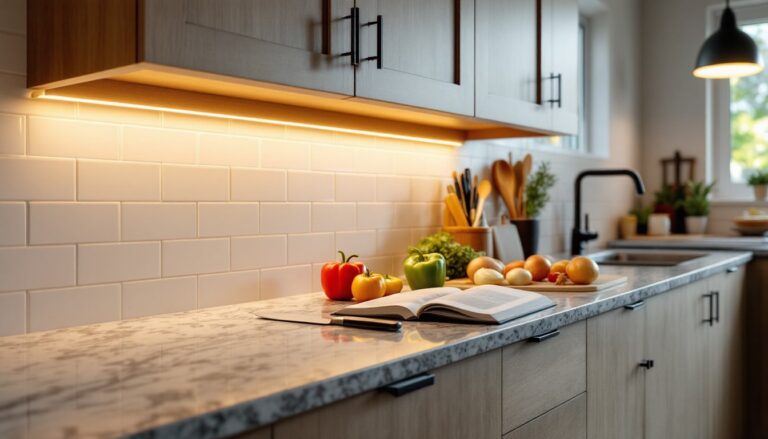
Layer your lighting. Pendants provide focused light, but they shouldn’t be the only source. Add recessed cans for general illumination, under-cabinet LED strips for task lighting, or wall sconces for accent. This layering strategy is a staple in modern home design, as seen in spaces featured on Curbed, where industrial fixtures complement rather than dominate.
Mind the finish consistency. If your pendant is matte black, consider black cabinet pulls, faucet fixtures, or window frames. You don’t need to match everything, but repeating the finish two or three times ties the design together. Mixing metals (black pendants with brass hardware, for example) works if one is clearly dominant.
Finally, don’t neglect the bulb as decor. Vintage filament bulbs are part of the aesthetic. If the shade is open or caged, the bulb will be visible, choose one that looks intentional. Clear glass, squirrel-cage filaments, and globe shapes all add character. For inspiration on pairing industrial fixtures with broader decor trends, Decoist offers galleries of real installations that balance raw materials with refined details.
PPE reminder: When installing or adjusting fixtures, wear safety glasses (especially when working overhead) and work gloves if handling sharp-edged metal shades. If cutting metal rods or drilling into joists, use hearing protection.